

Table of Contents
Table of Contents
The Stages of the Threat Intelligence Lifecycle
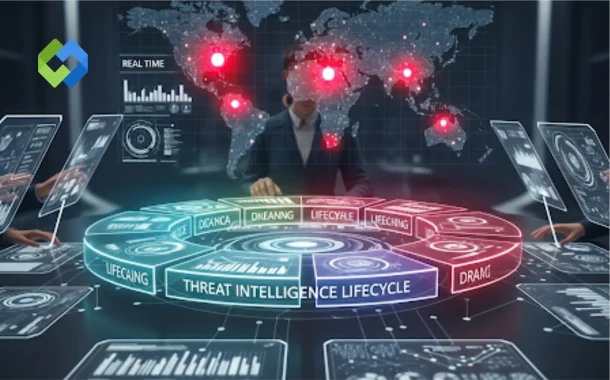
The Threat Intelligence Lifecycle is a framework that deals with threats in detail. There are important steps in this process that allow for gathering, analysing and acting on it. By repeating these stages of the threat investigation, teams of cybersecurity teams can stay ahead of attackers.
1. Planning and Direction
When it comes to Threat Intelligence Lifecycle stages, planning is the first step. Also, you must set your objectives. At this stage, entities specify their objectives and discuss the threat types they wish to safeguard against. If you are looking to monitor external threats such as malware or internal threats, you want to identify assets that need protection, which tools/resources will be required.
Planning is the first stage and it will set the scene for the entire lifecycle. To manage risk better, organisations need to prioritise and understand what’s more at stake to arrange threat detection platforms and analysis to deal with threats effectively. To help focus on specific malware types, they will usually interface advanced malware detection tools such as VMRay during this stage.
2. Collection
After defining objectives, the next step is to collect the required data. The collection of information is crucial as the quality of information determines the quantity of analysis. There are many sources that can be used to collect threat intelligence like open-source intelligence (OSINT), commercial threat feeds and logs from firewalls, endpoints and servers. Sometimes, they might also look at places on the dark web. These are forums where bad guys talk about tricks to exploit weaknesses.
When it comes to malware samples, VMRay is a major player in this collection phase. This application consists of a dynamic analysis that allows automatic processing and analysis of suspicious files. By studying the threat, organisations can learn how a particular threat works and use it to detect threats better.
3. Processing
Once you collect raw data, the next step is processing it. In this stage, filtering, structuring, and correlating information are done so as to exclude any irrelevant or extraneous data.The objective is to convert raw intelligence into actionable insights that can help decision-makers comprehend the threat’s scale and impact. To help with an enriched data stack, threat intelligence platforms such as VMRay are used. For instance, malware behaviour and other IOCs help VMRay analyses to get a detailed view of how the threat acts and the magnitude and extent of damage done. After going through the life cycle, the processed information can be used to determine various aspects like patterns, trends, behaviours and more.In addition, resources like VMRay offer deeper insights into how this enriched data supports each phase of the threat intelligence lifecycle, helping teams understand, evaluate, and operationalise threat information more effectively.
4. Analysis
During the analysis phase, we evaluate the threat intelligence to learn its relevancy and the impact it could potentially have. This part is where we look at the data in more detail, check a number of sources and assess whether the intel fits the organisation’s threat model.
A significant aspect of the analysis stage is determining the TTPs of the threat actors. This is where tools like VMRay add significant value. Cybersecurity teams can gain insights into the techniques used by attackers to evade detection with VMRay’s detailed sandboxing of suspicious files. The analysis involves determining how the attack will occur, name of the threat, the vulnerability that’s being exploited, as well as the probability of the threat reaching its target.
5. Dissemination
After analysis, the next step is to communicate the results to the relevant parties. This makes sure that the people who can make decisions have the information they need to do something. Phase of propagation is an important phase for converting intelligence into action. Depending on the situation, the information can go from incident response teams to executive leadership.
When information is effectively shared, organizations are ready to take action when a threat takes place. Often, the real-time data is supplied to endpoint detection systems, firewall settings, and intrusion detection systems for taking measures against newly emerging threats. The information provided by VMRay and other similar products can also be incorporated into an automated response to limit the damage caused by an attack.
6. Response and Mitigation
After intelligence is spread, it’s time for the organization to react and retaliate. In the response and mitigation phase, defensive actions are taken that reduce or eliminate the risk. Security patches might be needed by deploying antivirus signatures and enhancing the firewalls and blocking the IP addresses that are harmful.
At this stage, the insights of the earlier steps of Threat Intelligence Lifecycle are put into action. If VMRay’s analysis shows certain malware activities or communication, those techniques can be used to refine the organization’s security and plan a more customized response. For example, the security team might deploy additional endpoint monitoring or increase network segmentation to prevent agents from moving laterally.
The aim of this phase aims is to interdict the incident before damage occurs and to learn from the incident to better prevent a repeat. This continuous process of improvement guarantees will always be cyber safe from a new form of attack.
7. Feedback and Improvement
The feedback and improvement stage is the last stage of the cycle. Responses to threats are analysed by cybersecurity teams to identify any detection and mitigation weaknesses which might exist in their processes. It will help in improving the organization’s strategy and in continuously improving threat intelligence.
For instance, if a certain threat was not detected in time, during the analysis phase it can be found out that certain indicators were not observed or a certain signature was missing in detection systems. In such situations, the continuous improvement of VMRay and dynamic analysis can help organizations respond to new attacks. Through the feedback process, lessons learned from one event could be applied to an incident. This would improve the threat model and adjust the defences.
The Role of VMRay in the Threat Intelligence Lifecycle
VMRay plays a major role in the Threat Intelligence Lifecycle by collecting, processing, and analysing threat Intel. It supplies malware analysis tools for examining the behaviour of malware in a contained environment. Using VMRay, organizations can see, which files are dangerous, and how criminals misbehave. It helps to spot and limit the threat better.
VMRay can also be used with other security platforms. This allows for intelligence sharing. VMRay provides information on dangerous actions and also includes a variety of elements. As a result, the respective teams receive actionable reports on malicious activities that allow them to take countermeasures before the actual strike takes place.
In short, threat intelligence lifecycle of an organization plays a vital role in cybersecurity. When organizations are aware of potential and existing threats, they can plan efficiently. Threat assessments can take a while, but are very worthwhile. VMRay, among other tools, helps at every stage in the lifecycle, thereby increasing the effectiveness of any threat. As cyber threats continue to evolve, a mature threat intelligence process can significantly assist in bolstering defence posture and organisational resilience.