

Back in the 1960s, NASA engineers created devices to monitor astronauts’ vital signs during missions. Data on heart rate, blood pressure, and oxygen levels were transmitted from orbit to Earth in real time. These experiments laid the foundation for future remote patient monitoring software, which today is used to track the health status of millions of patients in hospitals and at home.
But the real moment when technology moved from laboratories into the daily lives of millions came in 2020. The COVID-19 pandemic became a turning point for medicine and a powerful catalyst for the mass adoption of RPM. When hospitals were overwhelmed and contact between doctor and patient became risky, remote monitoring technology transformed into a real necessity. Software for remote patient monitoring allowed doctors to see patient condition dynamics remotely, respond instantly, and reduce risks for all participants in the process.
Interesting fact: if you have an Apple Watch or Fitbit, you’re already using a form of RPM technology. These gadgets track pulse, ECG, sleep, and blood oxygen saturation. While they don’t always have medical certification, they’ve popularized the very idea of continuous health data collection. And if Iron Man once monitored his vital signs using a computer in his suit, today any patient with a smart bracelet or connected medical device does the same.
What was once an experiment for astronauts now saves lives every day. Next, we’ll explore exactly how this system works, what critical conditions it prevents, what technologies are involved, and how to apply them.
Table of Contents
Table of Contents
What Is Remote Patient Monitoring Software and How It Works
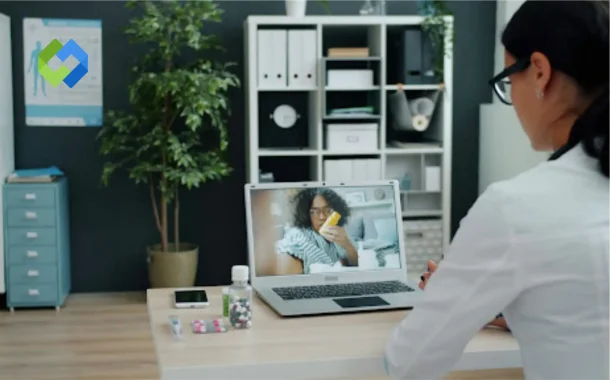
Software for remote patient monitoring is a digital ecosystem that connects patients, medical devices, and doctors into a unified monitoring network. The system collects biometric data through connected devices: heart rate, blood pressure, glucose levels, body temperature, blood oxygen saturation (SpO2), weight, and even patient activity throughout the day.
These indicators are transmitted to the cloud, where they’re stored in encrypted form. Then the doctor sees analytics through a specialized dashboard, and the system can automatically alert about risks or deviations. This isn’t just convenient—it changes the very logic of medical care: instead of reacting to an already developed illness, we gain the ability to prevent its exacerbation.
Remote patient monitoring use cases already cover dozens of areas:
- Chronic diseases – patients with diabetes or heart problems can transmit data daily, while the doctor monitors progress remotely.
- Post-operative monitoring – RPM reduces the risk of complications because the doctor sees changes in condition in real time.
- Elderly care – patients gain freedom of movement, while loved ones have peace of mind knowing that data is constantly being transmitted.
The real value of RPM lies in the synergy of technology and clinical experience. That’s why companies are emerging in the market to help hospitals and various brands create safe, scalable, and technological healthcare solutions.
For example, DXC actively works on implementing IT solutions healthcare that help hospitals transition from paper processes to intelligent data analysis systems, integration with IoT devices, and real-time monitoring, creating infrastructure for large-scale monitoring systems.
Key Technologies Behind RPM Solutions
Remote patient monitoring software development literally saves lives. This is best seen through examples of real diseases and analysis of existing key technologies.
Diabetes patients no longer have to prick their finger several times a day: devices like Dexcom G7 or Abbott FreeStyle Libre track glucose levels every minute and transmit data to the doctor in the cloud. This is IoT in action: a small sensor on the skin transmits a signal through a smartphone to a medical system, where an algorithm analyzes fluctuations and can warn of a dangerous drop in sugar levels before the patient feels symptoms. And the collected data is stored in the cloud—this is the role of Cloud computing. The cloud ensures secure data storage and allows a doctor in Boston to monitor a patient in Tokyo.
Or take cardiology. Systems like AliveCor KardiaMobile and Withings ScanWatch help detect arrhythmias that often cause strokes. Here AI and Machine Learning come into play because they learn from millions of cardiograms to distinguish harmless pulse acceleration from potential danger. Sometimes even faster than a doctor. Algorithms can detect anomalies in indicators, predict risks of heart attacks or hypoglycemia even before the patient feels symptoms. Medicine is transitioning from “treatment after” to “prevention before.”
Interestingly, these technologies could have saved many prominent people in the past. For example, Wolfgang Amadeus Mozart died from a disease that today could have been diagnosed in time thanks to continuous monitoring. And if Abraham Lincoln had had a fitness tracker with heart rate control—perhaps medical history would have looked different for him (at least until the moment at Ford’s Theatre).
The USA, UK, Germany, and Japan are currently leaders in RPM solution implementation, and it’s there that the technology is already integrated into state healthcare systems.
To enhance security, some companies like BurstIQ or Patientory are experimenting with Blockchain, creating secure networks for exchanging medical records. The patient controls who sees their data, adding transparency that medicine often lacks.
Even major tech brands like Apple Health or Fitbit Health Solutions have made RPM part of everyday life. The irony is that what was once technology for astronauts now fits into an ordinary watch.
Common Challenges in RPM Software Development
Even the best engineers face problems that are difficult to predict on paper.
- Privacy and cybersecurity. Medical data is the most valuable information for cybercriminals. One leak can destroy trust in the system. Encryption, multi-factor authentication, regular security audits—all these are mandatory components.
- Real-time connectivity. Perfect software works flawlessly in an office with gigabit internet. But what if the patient lives in a rural area with unstable 3G? The system must be able to work in poor connection conditions, store data locally, and synchronize it when internet becomes available.
- Medical liability. Who is responsible if the system fails to record a critical change in indicators? The software developer, device manufacturer, or doctor? Legal aspects here are extremely complex. That’s why documentation, certification, and clear protocols are so important.
- Bluetooth heart rate monitor won’t connect. This sounds trivial, but such a situation ruins all the “magic” of RPM. Engineers can write perfect code, but if the device doesn’t sync with the app, the entire system becomes useless. Equipment compatibility is developers’ headache.
What If These Technologies Had Existed Earlier
Remote patient monitoring use cases clearly show how this technology saves lives today. But it’s hard to imagine how many tragedies could have been avoided if it had existed earlier.
Sudden death from heart failure often doesn’t happen instantly. It’s preceded by hours, sometimes days of warning signals: rapid heartbeat, arrhythmia, shortness of breath. But if a person is alone at home, these symptoms may go unnoticed until the critical moment.
A “silent” heart attack is a heart attack without pronounced symptoms that a person may endure “on their feet” without even suspecting the seriousness of the situation. A wearable biosensor would have detected ECG anomalies and called a doctor.
A diabetic crisis from a sharp sugar spike can lead to coma. But if a glucometer transmitted data in real time, the doctor would receive a notification and could intervene.
Let’s fantasize historically. Elvis Presley died on August 16, 1977, at his home in Graceland. He was only 42. Although the exact circumstances of death still cause controversy, it’s known that he suffered from severe hypertension, cardiac arrhythmia, and intestinal problems. His death came suddenly when he was alone in the bathroom.
If remote patient monitoring software had existed then, the situation could have unfolded differently.
Scenario “If Elvis Presley Had Had RPM”:
| RPM Component | What Could Have Been Tracked | How It Could Have Saved Him |
| Connected blood pressure monitor | Critical blood pressure spikes (Hypertensive crisis) | RPM would have recorded that the patient’s pressure was exceeding dangerous limits hours or days before collapse and automatically called a nurse. |
| Wearable biosensor | Critical cardiac arrhythmia (e.g., atrial fibrillation) or worsening oxygenation due to his breathing problems | Would have clearly recorded heart rhythm anomalies or decreased blood oxygen levels that preceded cardiac arrest. |
| Activity monitoring system | Unusual inactivity (e.g., too long without movement at night or in the morning) or a fall | The system could have identified that the patient remained motionless for too long in an unusual place, even if he couldn’t press the call button. |
Elvis’s death was sudden but not instantaneous. It resulted from chronic diseases that went out of control. RPM could have registered critical biometric changes before loss of consciousness, providing additional hours for medical intervention. Hours he so desperately lacked.
Remote Patient Monitoring Software as the Future of Care
RPM embodies the futuristic dream of being able to “see” a person’s health remotely and in real time. It transforms passive waiting for illness into active preventive intervention. In science fiction, this is realized through dramatized technologies and fictional devices. But now this idea is taking clear and logical development in reality. Simply to improve life, to make it safer and more convenient.
Remote patient monitoring software development is changing the fundamental logic of medicine. Instead of a reactive approach, where a doctor intervenes after symptoms appear, we’re moving to a preventive model. The system sees problems at the embryonic stage, when intervention is still easy and effective.
For patients, this means peace of mind. No need to constantly worry whether everything is okay, whether some warning signal was missed. The system monitors continuously, and if something’s wrong, the doctor finds out first.
For doctors, it’s confidence. They see objective data, dynamics of changes, can make decisions based on facts, not just the patient’s words. Software for remote patient monitoring allows doctors to be “next to the patient” even when they’re hundreds of kilometers apart.
Remote patient monitoring use cases continue to expand. Today it’s chronic diseases and post-operative monitoring. Tomorrow, it could be mass population health surveillance, early disease diagnosis, personalized prevention programs.
Ultimately, this isn’t just about technology. It’s about people living longer, healthier, and more peacefully. It’s about doctors having tools to save lives that seemed unreachable just yesterday. It’s about a future that has already arrived.