

Guest posting services and marketplaces solve this in two main ways:
- Marketplaces—you pick sites and control every placement.
- Agencies—you hand off strategy, outreach, and content to a team.
Below is a fresh shortlist of 5 guest posting services popular with U.S.-focused brands.
Table of Contents
Table of Contents
1. Serpzilla – Self-Serve Guest Posting Marketplace with Huge Inventory
Best for: SEOs and agencies who want maximum control and a big choice of U.S. and international publishers.
URL:https://serpzilla.com/guest-posting/
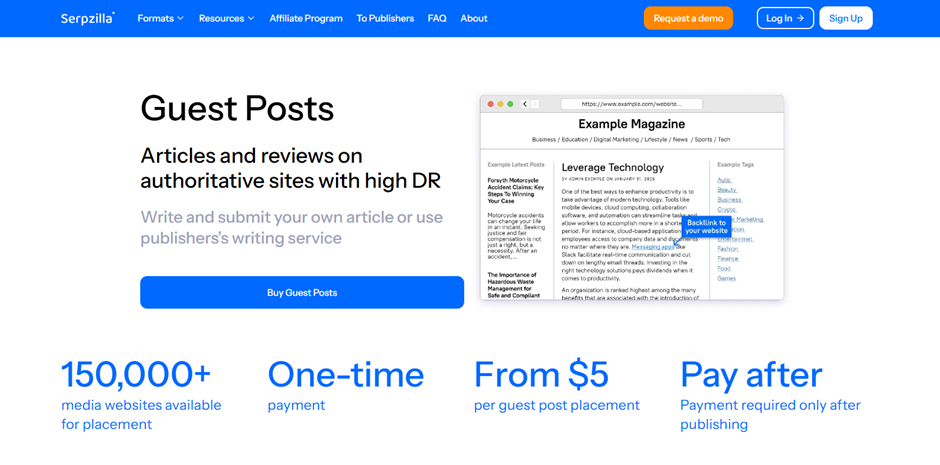
Serpzilla is a self-service marketplace where you buy guest posts and other link placements directly from a massive catalog of sites. You log in, filter publishers by metrics, pick the ones you want, and place orders yourself instead of relying on a closed “agency list.”
Main capabilities
- 150,000+ media websites available for guest post placement, across many countries and verticals.
- Multiple formats: guest posts, reviews, articles, niche edits, and rental / sitewide links in one interface.
- Filters by DR/DA, estimated organic traffic, topic, language and price, so you can tune the catalog to U.S.-focused campaigns and relevant niches.
- From $5 per guest post on smaller sites, one-time payment, and “pay after publishing” – payment is only required once the post is live.
Pros
- High transparency: domains, key metrics and prices are visible before you order – no blind “we’ll find sites for you” packages.
- Easy to scale: once you’ve set your filters and shortlists, you can place many orders in a single session.
- Flexible budgets: cheap placements for supporting content, plus stronger, higher-DR sites for your core landing pages.
- Independent reviews: third-party reviewers call Serpzilla a “legit guest-post marketplace” with powerful filters and responsive support.
Cons
- You still make the SEO decisions: the platform won’t tell you which sites are good or bad – someone on your side must evaluate relevance and risk.
- Interface can feel dense: many filters and metrics can overwhelm beginners at first.
- Not every data point is perfect: some reviewers note missing granular stats (like traffic split by country), so many users double-check prospects in Ahrefs/Semrush.
2. The HOTH – U.S.-Based Guest Posting Packages
Best for: businesses that want simple, productized guest post packages from a U.S. provider.
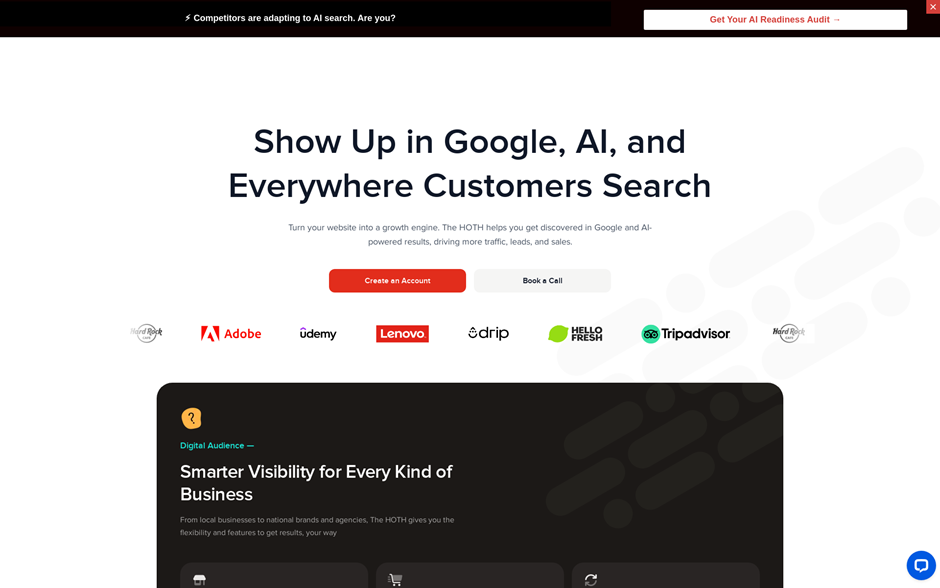
The HOTH (headquartered in Florida) is well-known in the SEO world for its HOTH GP guest posting service. They run outreach to relevant blogs and sites, write content, and place in-content links for you – you mostly just choose DR and quantity.
Main capabilities
- Fully managed guest posting service (HOTH GP): they pitch and secure posts on niche or general sites relevant to your brand.
- In-content editorial links, not just author bio or footer links.
- Scalable packages with different DR / traffic tiers to match small and large budgets.
- White-label options so agencies can resell under their own brand.
Pros
- Very straightforward: pick a package, share your URLs/anchors, and they handle the rest.
- Strong network of sites: independent round-ups highlight The HOTH’s large inventory and scalability.
- U.S.-friendly: support, billing and communication are all aimed at U.S.-based businesses and agencies.
Cons
- Less transparency: you don’t browse a live list of domains – you buy by DR/traffic tier and trust their network.
- Quality can vary by order: as with any high-volume service, site quality may fluctuate, so you should review placements.
- Not ideal for very strict brand guidelines: if you need to pre-approve every domain, a marketplace like Serpzilla may be a better core tool.
3. uSERP – High-End Guest Content & Digital PR for U.S. Brands
Best for: funded companies and SaaS brands that want premium editorial links from top-tier U.S. media and industry blogs.
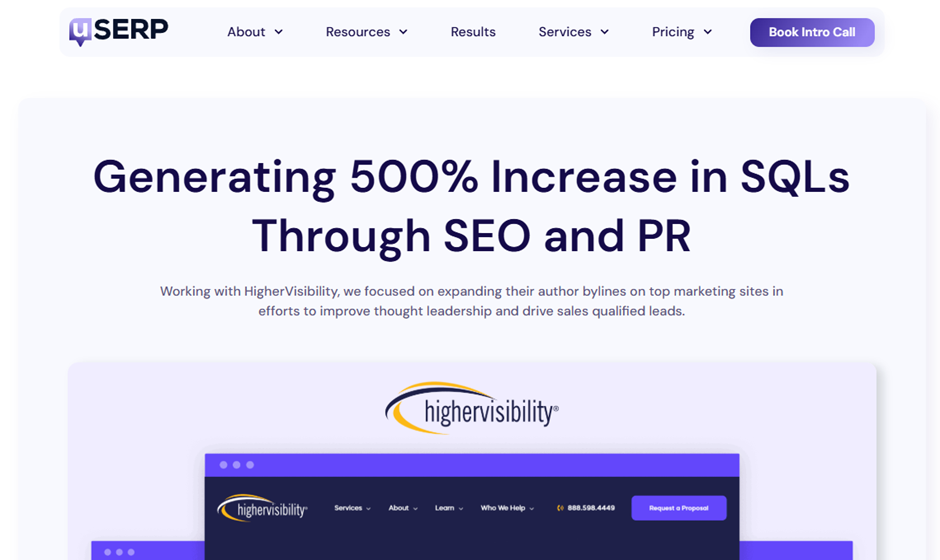
uSERP is a U.S.-based link building agency that focuses on editorial content, guest contributions and digital PR, rather than pure “pay-per-post” deals. They’ve run campaigns for brands like monday.com, Robinhood and CrowdStrike and are frequently ranked as a top link building agency.
Main capabilities
- Full audit and link strategy tailored to your brand and competitive landscape.
- Mix of tactics: editorial outreach, guest content contributions, resource pages, unclaimed brand mentions, journalist outreach and contextual insertions.
- Focus on high-authority, real-traffic domains rather than easy paid placements.
- Transparent, case-study-driven reporting: they show impact on rankings and organic traffic, not just counts of links.
Pros
- Quality over quantity: strong emphasis on links from genuinely authoritative U.S. sites.
- Proven performance: public case studies show big traffic gains for well-known brands.
- Strategic input: you’re not just buying links; you’re buying planning, positioning and PR-style outreach.
Cons
- Premium pricing: their own materials state that serious white-hat link building often runs into $5,000–$25,000+ per month, and “under $900 per link” is usually a red flag at their quality tier.
- Not a catalog: you get strategy and outreach, not a dashboard to pick specific domains.
- Overkill for small sites: this level of service makes sense for brands with serious growth targets and budgets, not side projects.
4. Stan Ventures – Premium U.S Guest Posting Services With Full Transparency
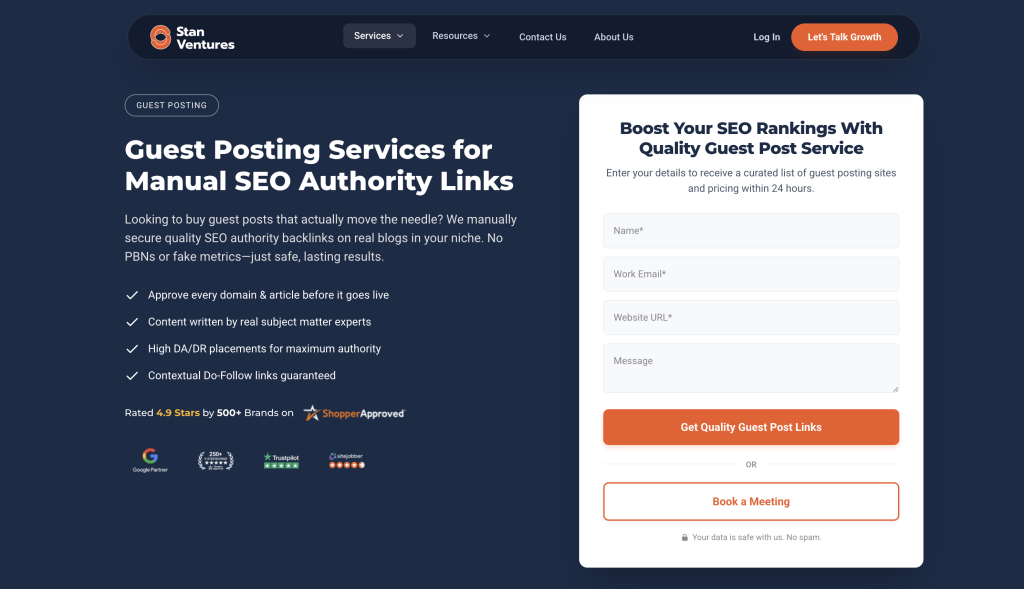
Best for: Businesses and agencies that want high-quality, U.S.-focused guest posts with strict quality control and transparent delivery.
Stan Ventures offers premium guest posting services built around relevance, real traffic, and editorial integrity. They use manual outreach to secure placements on niche-relevant websites that already rank and drive organic visitors. This ensures every guest post contributes to both authority and actual search visibility—not just DR metrics.
The process is designed to give you control without slowing down execution. You get a pre-approval list of websites, custom-written content aligned with your brand, and contextual, in-content links placed naturally within high-quality articles. Their white-label workflows and reporting also make it easy for agencies to scale guest posting without adding internal bandwidth.
Main Capabilities
- Fully managed guest posting with manual outreach to real, traffic-generating websites
- Contextual, in-content editorial links placed within high-quality, niche-relevant content
- Pre-approval process for domains, topics, and anchor strategy before publication
- White-label delivery and reporting for agencies and resellers
Pros
- High transparency: you review and approve every placement before it goes live
- Traffic-first approach: placements are chosen based on real organic visibility, not just DR
- Consistent quality: manual outreach avoids low-quality or recycled site networks
- Scalable for agencies: built-in white-label workflows and dedicated account support
Cons
- Not instant: manual outreach takes more time compared to marketplace-style platforms
- Premium positioning: Focused on quality and relevance over low-cost placements
- Requires collaboration: Approvals and strategy alignment may need a bit more involvement from your side
5. Page One Power – U.S. Link Building Agency with Guest Posting Focus
Best for: companies that want a U.S. agency doing fully manual, content-driven guest posting.
Page One Power is a link-building and content marketing agency based in Boise, Idaho, operating since 2010. They emphasize sustainable, white-hat link building and offer guest posting as a core tactic: building editorial relationships and writing original content for relevant sites.
Main capabilities
- Manual guest posting campaigns that secure editorial links to your site through custom outreach and original articles.
- U.S.-based content team writing tailored guest posts that fit host sites’ guidelines and audiences.
- Broader services: keyword research, on-page SEO and content strategy to support link campaigns.
- Long-term, relationship-based link building rather than quick one-off placements.
Pros
- Made-in-the-USA operation: U.S. office, writers and account management – helpful if you want “local” context for American audiences.
- Manual, white-hat approach: fully editorial connections and original content; no automated blasts or link farms.
- Holistic SEO view: they understand how guest posting fits into overall content and technical SEO, not just link counts.
Cons
- Agency pricing: you’re paying for a full team (strategy + outreach + writing), so this will cost more than marketplace placements per link.
- Slower delivery: relationship-based outreach tends to work on a months-not-days timeline.
- Less micro-control: you won’t be choosing from a giant public list of domains.
6. NO-BS Marketplace – Self-Serve Guest Post Marketplace with White-Label Options
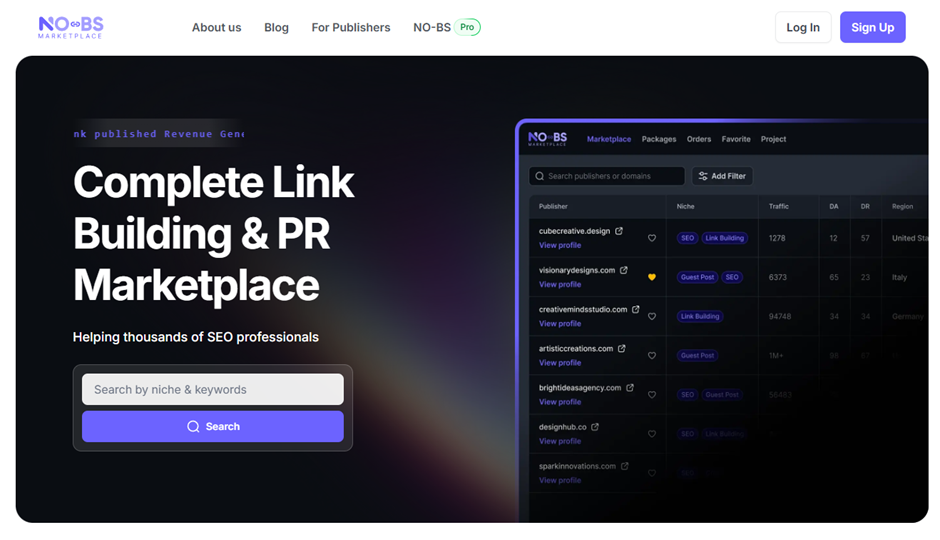
Best for: agencies that want a self-service guest post marketplace with some managed support.
NO-BS Marketplace is a guest posting and link building platform that connects you with a network of vetted sites for placements. Agencies especially like that it removes much of the outreach workload while still letting them pick sites and topics.
Main capabilities
- Marketplace for buying guest posts and link insertions from verified publishers, with an emphasis on real sites and manual vetting.
- White-label operation: many agencies use NO-BS behind the scenes to power their client link building.
- Self-serve system for placing orders plus “Pro” plans that add a dedicated project manager and custom outreach beyond the core database.
- Publisher metrics and feedback systems to screen sites before ordering.
Pros
- Time saver for agencies: designers of the platform position it as a way to “take link building hassle off your shoulders” with a couple of clicks.
- Control with support: you can still pick sites and topics while getting help from NO-BS staff on larger campaigns.
- Positive long-term feedback: many SEOs and agencies report years of consistent use with good results.
Cons
- Recent acquisition and slower updates: some industry voices note a period of “no major updates” and declining traffic after the company was acquired, so you should test current performance yourself.
- Data depth: like most marketplaces, publisher metrics aren’t as deep as what you’d see in Ahrefs/Semrush, so extra vetting is still wise.
- Not U.S.-only: great if you work globally, but if you need strictly U.S. sites, you’ll rely heavily on filters and manual checks.