


Table of Contents
Assessing Team Needs First
Begin by asking diagnostic questions that determine gaps. Remote teams require digital collaboration that is being fortified by virtual connections. Recruits need fast relationship development and cultural orientation. The challenge-based activities help in eliminating complacency in high performing teams. The groups that can easily go into conflicts should be taken through trust building activities, which focus on vulnerability and empathy. Manager insights and survey answers inform accurate choice of activities.
Aligning Activity Type to Objective

The different team building experiences at work have different purposes: trust falls develop physical dependence; escape rooms is a test of problem solving under stress; cooking classes teach division of labour and collective achievement. Communication oriented teams enjoy such activities as back-to-back drawing where one partner explains shapes to be drawn by blindfolded partner. Creative teams are energized by the challenges of innovations such as hackathons where members are given 24 hours to solve real business problems.
Considerations between Indoor and Outdoor
Indoor activities would be more appropriate in regards to weather-independent scheduling and access. Scavenger hunts are creative means of transforming office spaces whereas trivia contests are competitive using the company knowledge. Volunteer projects make teams energy-directed towards the community. Outing activities are also physically invigorating–ropes courses are a challenge to each other; field days are your childhood games played competitively. It is also possible to have nature walks where people talk freely without being triggered by work.
Remote Group Virtual Team Building
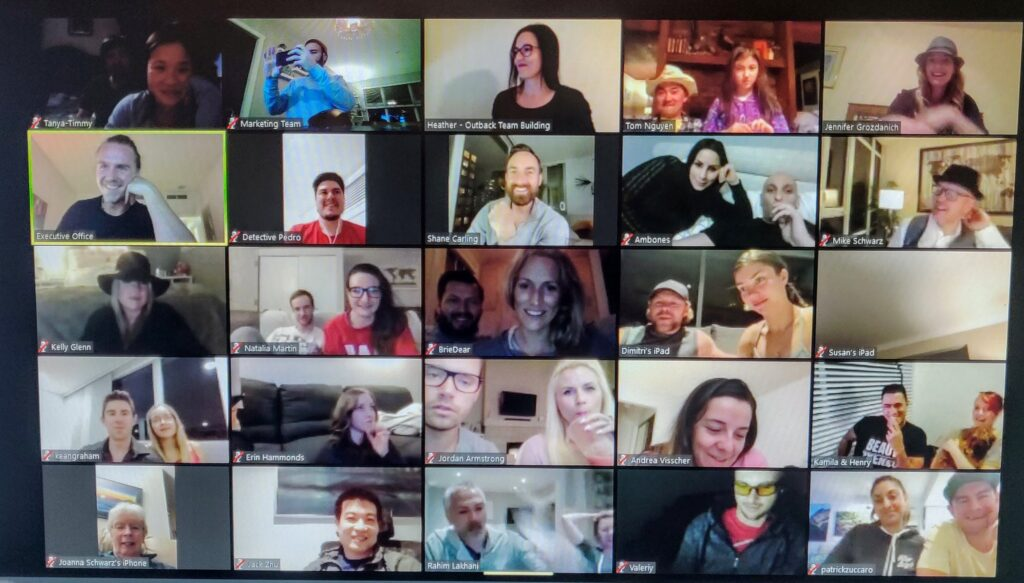
Digital versions keep people in touch. Virtual escape rooms involve the cooperative use of time-pressured puzzles in real-time. Online cooking courses combine recipes that are shared on the screen with chatting. Smartphone cameras recording imaginative workplace interpretations are used to scavenge in digital hunts. Trivia sites involve departments compete against one another in competition as well as unearthing unrecognized knowledge.
Budget and Logistical Structure
Free options make use of the resources at hand – paper airplane competitions claim iterative design thinking; two truths and a lie exposes some unexpected personal knowledge. Cost-effective options are potlatch lunches that feature diversity of culinary choices or competition in office decoration. Mid-range investments sponsor bowling in the night or museum field trips that offer talking points. The ropes courses that are of high end provide a high intensity of physical bonding but must have safety planning.
Group Size Optimization
Small teams (5-12) do best during activities that are intimate and that need physical coordination such as knots of people in need of unknotting. Medium groups (15-30) are also competitive with formats such as trivia bowls, relay races, or cooking showdowns. Both dynamic team rotating stations and department-versus-department competitions with healthy rivalry make large organizations (50 or more) successful.
Inclusivity and Accessibility Design
The principles of universal design provide participation. Activities are flexible to different physical abilities, cultural backgrounds and introvert/extrovert preferences. The visual aids are taken to assist the hearing-impaired participants, quiet areas offer introverts recharge. Training of cultural sensitivity avoids unintentional offending prompts. Preparation through advance agendas eliminates anxiety.
Measuring Actual Impact
Pre and post surveys measure the level of connection, trust and confidence of collaboration. Engagement metrics monitor the growth of cross-team project participation. Long-term effectiveness is justified by the retention rates of the participants. The increase in morale is indicated by the cut of absenteeism. Behavioral changes are observed by the leadership during further meetings.
Best Practices in Implementation.
The models of leadership participation ensure vulnerability that is necessary in psychological safety. Group dynamics among the vocal members are handled by professional facilitators who ensure that they do not dominate. The expectations are harmonized by having clear targets which are communicated in advance. The debriefing sessions relate the insights of the activities to the application in the workplace. Micro-activities as follow-ups keep the momentum going so that there is no one-off aspect.
Timing and Frequency Strategy
There is no fatigue and no loss of contact due to quarterly cadence. Annual retreats provide stronger bonding of the established teams off-site. Hybrid team familiarity is ensured by monthly 30-minute icebreakers. New teams necessitate urgent intensive bonding which hastens unity.
The rightfully selected team building turns the workplace relationships into the provision of psychological safety, trust, and cross-functional cooperation that brings the business outcomes. Intentional debriefing and purposeful matching avoid wastage of effort whereas translating experiences to lasting behavioral change.