


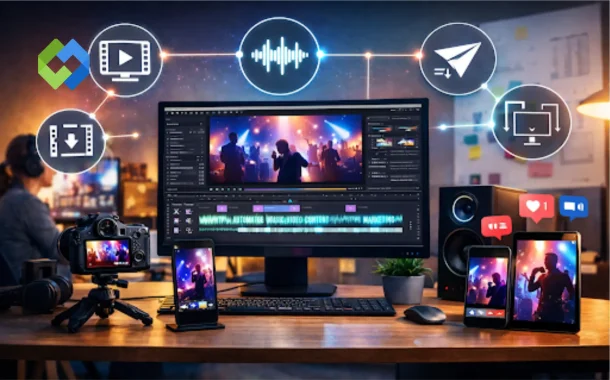
This article explores how automation is reshaping music video production, why it matters for modern marketing teams, and how you can use it to stay competitive without burning out your resources.
Table of Contents
Table of Contents
Why Music Video Content Matters in Marketing
Music-driven video content has quietly become one of the most versatile tools in a marketer’s toolkit. It works across platforms, adapts well to short-form formats, and connects emotionally with audiences faster than static visuals.
Brands now use music videos for:
- Product launches
- Social media ads
- Brand storytelling
- Event promotions
- Podcast and audio content visuals
The challenge? Traditional video production takes time, money, and specialized skills—luxuries most lean teams don’t have.
The Real Cost of Manual Video Production
Creating videos the traditional way often involves multiple steps and stakeholders. Even a short clip can require concept development, design, animation, revisions, and exports for different platforms.
For small teams, this leads to common problems:
- Bottlenecks when one person handles everything
- Delayed campaigns due to production timelines
- Inconsistent visual quality
- Burnout from repetitive editing tasks
Manual workflows simply don’t scale well when content demands increase.
What Automation Actually Means
Automation doesn’t mean sacrificing creativity or turning everything into generic content. It means removing repetitive, time-consuming steps so teams can focus on strategy, messaging, and experimentation.
In the context of music video content, automation usually includes:
- Pre-built motion templates
- Automatic audio syncing
- One-click format resizing
- Fast rendering and exports
Instead of starting from scratch every time, teams can customize proven structures that already look polished and professional.
Why Automation Is Perfect for Lean Teams
Lean marketing teams thrive on efficiency. Automation supports that by delivering speed and consistency without increasing headcount.
Here’s what automated music video creation tool enables:
- Faster campaign launches
- More content variations for testing
- Consistent branding across platforms
- Reduced dependency on external agencies
When one marketer can create what used to require a small production team, the entire operation becomes more agile.
The Role of Specialized Tools
General video editors are powerful but often overkill for marketing needs. They also come with steep learning curves. That’s where purpose-built solutions shine.
Pairing video automation with an AI Rhyme Generator helps marketers quickly create engaging lyrics that complement their audio and video storytelling.
For teams producing content regularly, this difference adds up quickly.
Data Shows Video Is Worth the Effort
If you’re wondering whether video content is worth prioritizing, the data is clear.
According to Wyzowl’s Video Marketing Statistics report, 91% of businesses use video as a marketing tool, and 96% say it has helped increase user understanding of their product or service.
That level of adoption doesn’t happen by accident. Video works—and automation makes it accessible even for small teams.
How Automation Improves Consistency
One underrated benefit of automation is visual consistency. When multiple people work on content, styles can drift. Templates and automated systems act as guardrails, ensuring every video aligns with brand standards.
This is especially valuable when:
- Multiple campaigns run simultaneously
- Content is published across many platforms
- Freelancers or contractors are involved
Consistency builds trust, and trust drives conversions.
Scaling Content Without Scaling Costs
Lean teams often struggle when leadership asks for “more content.” Automation makes that request realistic.
Instead of producing one video per campaign, teams can:
- Create multiple versions for A/B testing
- Adapt videos for different audiences
- Repurpose audio into visuals quickly
- Maintain a steady posting schedule
This kind of output would be unsustainable with manual production, but automation turns it into a manageable process.
Common Concerns
Some marketers worry that automated videos will look generic or lack personality. In reality, quality depends on how tools are used, not whether they’re automated.
The best results come from:
- Choosing templates that fit your brand voice
- Customizing colors, typography, and motion
- Pairing visuals with strong messaging
Automation handles the heavy lifting. Creativity still comes from the team.
Final Thoughts
Automating your music video content isn’t about cutting corners—it’s about working smarter. For lean marketing teams, it opens the door to consistent, high-quality video without overwhelming resources or timelines.
As video continues to dominate digital marketing, automation ensures smaller teams can compete, experiment, and grow without losing momentum. The brands that adapt early won’t just keep up—they’ll stand out.