

Table of Contents
Table of Contents
What Is a Cryptocurrency POS Terminal and Why Does Business Need It
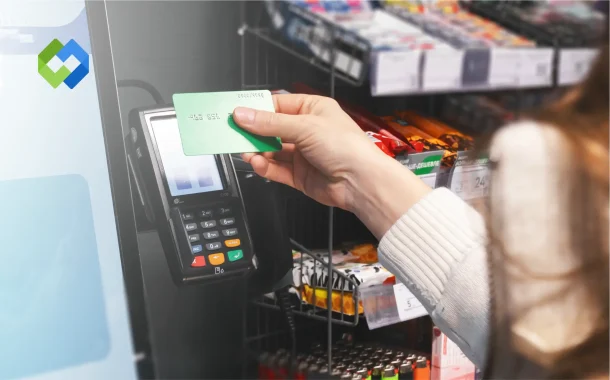
POS (Point of Sale) is the system or location where a transaction is completed, handling payment, recording sales, and managing inventory while providing data for accounting and business operations. With crypto, the POS terminal generates a QR code or wallet address, the buyer scans it with their phone and confirms the transfer. Technically nothing complicated – the scheme resembles contactless card payment, except instead of Visa you have Ethereum or Tether.
Why does the seller need this? First, commissions. Banks take 1.5% to 3% for acquiring, plus monthly subscription fees. Cryptocurrency payments cost 0.5–1%, often without fixed charges. Second, speed. Traditional bank transfers take one to two days, especially international ones. A transaction in USDT or Bitcoin confirms in 10–30 minutes, and in some networks – within seconds.
Third point – geography. If you work with foreigners (tourists, expats, remote clients), crypto lets you bypass currency control and conversion restrictions. Fourth – image. Accepting digital assets signals: we’re modern, flexible, we understand tech audience demands.
Of course, there are risks too. Volatility is the main headache: Bitcoin’s rate can jump 5% in an hour. That’s why most businesses use stablecoins (USDT, USDC) pegged to the dollar. Regulatory issues are also complex – though legislation in various European countries is gradually taking shape, with many jurisdictions now allowing crypto payments for goods within experimental frameworks.
Key Crypto POS Features: What the System Should Do
If the terminal just shows a QR code and waits for money to “arrive,” it’s a half-baked solution. A proper system should integrate into business processes – track inventory, generate reports, sync with the cash register. Let’s look at the main functions.
- Instant fiat conversion. You sold coffee for 5 euros, the customer paid in Bitcoin. The system automatically converts the cryptocurrency to dollars or euros at the current rate and credits your account. No risk of a drop – you immediately receive a fixed amount. Services like BitPay or Inqud offer this option.
- Support for multiple blockchains. Bitcoin, Ethereum, Litecoin, Tron, Polygon – each network has its own speeds and fees. The buyer can choose a convenient option: some hold assets on Binance Smart Chain, others on classic Ethereum. The more options, the wider the audience.
- Integration with accounting systems. If you use SAP, QuickBooks, or local automation software, the POS must transmit transaction data there. Otherwise, you’ll have to keep double books – once in the terminal, again in the program.
- Protection against double-spending and fraud. In blockchain, you could theoretically try to send the same coin twice (double-spending). Professional POS systems monitor transaction status in real time and don’t release goods until network confirmation. You also need tools to track suspicious wallets – if an address appears in scams, the system warns you.
- Reporting and taxes. Regulators will come with questions sooner or later. The system should generate detailed reports: date, amount, conversion rate, sender’s wallet address. Ideally – automatically calculate value-added tax and profit, considering cryptocurrency specifics.
- Offline mode (partially). The POS can’t work completely without internet – blockchain requires connectivity. However, the system can store transactions locally and send them in batches when network appears. Relevant for mobile trading or locations with unstable Wi-Fi.
How to Choose a Provider: Criteria and Pitfalls
The market overflows with offers. Someone promises zero commission (but takes hidden margin on conversion), someone demands buying proprietary hardware for several thousand dollars. Let’s examine what to look for.
- Licensing and reputation. The crypto world is the Wild West. Companies appear and disappear within a year. Check whether the provider has permits from local regulators (for example, VASP license in Europe). Read reviews on independent forums – Reddit, Bitcointalk, Trustpilot. If there’s silence about the company, that’s suspicious.
- Pricing model. Fixed subscription, transaction percentage, or hybrid? Calculate your economics. If you have 10 payments per month, a fixed $50 fee will put you at a loss. If 500 transactions, a percentage is better. Pay attention to hidden fees – for conversion, withdrawal, connecting additional currencies.
- Technical support. Blockchain doesn’t crash precisely at 9:00 when the office opens. Support should be 24/7, ideally with an English interface or at least responsive chat.
- SLA (Service Level Agreement). These are uptime guarantees – how much time the system works without failures. A normal indicator is 99.5% and higher. Lower means regular downtime, and for business every hour without accepting payments is lost money.
- Customization. Can you add the company logo to the terminal screen? Set up custom receipt design? Hook up a loyalty program? If you plan to scale, flexibility matters.
One of the market players is Inqud, which offers a crypto POS system that integrates over many cryptocurrencies with instant conversion. Their solution targets offline businesses in Europe, supporting stablecoins and protection from volatility. Not the only ones on the market, but worth attention if you’re looking for a comprehensive solution. Other providers include BitPay, CoinGate, and CoinPayments, also have good reviews in the market.
Security and Compliance: Avoiding Fines
Cryptocurrencies attract attention not only from clients but also regulators. Many countries have AML (anti-money laundering) and KYC (know your customer) rules. Even if you just sell sneakers, with large crypto payment volumes questions may arise.
- Customer identification. If the transaction amount exceeds a certain threshold (in the EU typically €1000), the law requires finding out who’s paying. This is difficult to implement offline – the buyer simply scans the QR code anonymously. Solution: tie payment to a loyalty card or ask to show ID when issuing goods. Inconvenient, but safe.
- Storing transaction data. Blockchain is public, but you must keep your own registry – who, when, and what they paid for. Storage periods vary: in some jurisdictions 5 years, in others 10. The system should archive records and provide access upon tax authority request.
- Protecting private keys. If someone gains access to your wallet’s seed phrase, they’ll withdraw all funds with no possibility of return. Private keys should be stored in hardware wallets (Ledger, Trezor) or multi-signature solutions where multiple parties’ signatures are needed for a transaction.
- Fund insurance. Some POS providers offer insurance against hacker attacks. This increases cost but gives peace of mind – even if something goes wrong, compensation covers losses.
- Working with blacklists. Public databases exist of wallets linked to scams, terrorism, or ransomware attacks. Integrate verification through services like Chainalysis or Elliptic – if a buyer tries to pay from a “dirty” address, the system blocks the operation.
Real Cases: Who’s Already Using Crypto Terminals
In 2021, El Salvador’s Pizza Hut chain started accepting Bitcoin after the country recognized it as legal tender. Not the most successful example – the rate collapsed, and conversion costs ate up profit. However, the idea worked: tourists actively paid with crypto, which compensated for losses.
In Switzerland, the city of Zug (known as “Crypto Valley”) allowed paying for municipal services via Bitcoin back in 2016. Local authorities installed terminals in administrative buildings. Over eight years, such payments didn’t exceed 0.5% of total revenues, but the PR effect was colossal – Zug turned into a Mecca for blockchain startups.
In France, cases are more modest but they exist. A network of coffee shops in Lyon launched a pilot project accepting USDT through terminals in 2022. In the first three months, they recorded 120 transactions with an average check of €8. Minor in business scale, but demonstrates demand among young audiences.
Technical Integration: Connecting the Terminal to Existing Infrastructure
A typical mistake is thinking crypto POS works by itself. Actually it’s part of an ecosystem: cash register, accounting, warehouse, loyalty program. Without connections, chaos emerges.
- Step 1: choosing equipment. Physical terminal (tablet or specialized device) or software-only solution (app on your phone/tablet). The first option is more reliable, the second cheaper. For small business, an iPad with installed POS app suffices.
- Step 2: connecting to the register. Most modern POS systems (Square, Clover, Poster) have APIs for crypto payment integration. You need a developer to set up data transmission: check amount, product list, payment status. If the register is old (for example, mechanical), you’ll have to keep parallel accounting – inconvenient, but there are no alternatives.
- Step 3: setting up conversion. Decide whether to keep revenue in crypto or instantly convert to fiat. The first option is for speculators (can catch rate growth), the second for conservatives. Most choose daily conversion – money is written off at day’s end at weighted average rate.
- Step 4: training personnel. Cashiers must understand how the scheme works. Show them step by step: customer approaches, you enter amount in terminal, system generates QR code, buyer scans, wait for confirmation (10–60 seconds), issue goods. Prepare written instructions – some employees aren’t tech-savvy.
- Step 5: testing. Before launch, conduct several test transactions. Pay yourself, check if data arrives at register, if receipt forms correctly, if amount converts. Better to find a bug during setup than in front of a queue of angry customers.
The Future of Crypto Acquiring: What to Expect Soon
The market moves in several directions simultaneously. First, regulation – the European Union launched the MiCA (Markets in Crypto-Assets) standard, which unifies rules for all member countries. This means more transparency and fewer “gray zones.” For business – clear game rules, for scammers – narrowed opportunities.
Second, integration with traditional payment systems. Visa and Mastercard are already testing cryptocurrency cards that let you spend Bitcoin like euros. The next step is direct settlements between POS and blockchain without intermediaries. Lightning Network technology (a layer over Bitcoin) allows conducting transactions in fractions of a second with fees under a cent.
Third, stablecoins are displacing classic cryptocurrencies in retail. Nobody wants to risk the exchange rate – both buyers and sellers choose USDT or USDC. Central banks are also developing their own digital currencies (CBDC) – a hybrid of crypto and fiat. If the European Central Bank launches a digital euro, it will integrate into POS terminals naturally.
Fourth, artificial intelligence in POS systems. Algorithms analyze demand, suggest optimal conversion rates, forecast load peaks. For example, if the system sees that every Friday crypto payment numbers grow, it automatically increases limits and reserves liquidity.
Fifth, decentralization of POS themselves. Currently most terminals work through intermediaries (BitPay, Inqud, CoinGate). The future is peer-to-peer solutions where buyer and seller interact directly through smart contracts. More technically complex, but cuts out intermediary commissions.
Conclusion
Crypto POS isn’t a panacea or mandatory option for every business. If you sell vegetables at a market to pensioners, there’s no point bothering. If your audience is freelancers, tourists, youth with tech backgrounds, ignoring crypto means losing 5–10% of potential income.
Main advantages: lower commissions, settlement speed, access to international audiences. Main risks: volatility (solved by stablecoins), regulatory uncertainty (solved by choosing verified providers), technical complexity (solved by staff training).
If you decide to try, start with a pilot – one sales point, one terminal, three months testing. Assess demand, calculate economics, listen to customer feedback. If numbers are positive, scale. If not, you’ve spent minimum money and time.
The world changes slower than blockchain evangelists promise, but faster than skeptics think. Cryptocurrency payments are no longer exotic – it’s a tool you can and should test. The main thing is don’t rush, don’t invest your last penny, and don’t believe in miracles. Technology works when used wisely.