

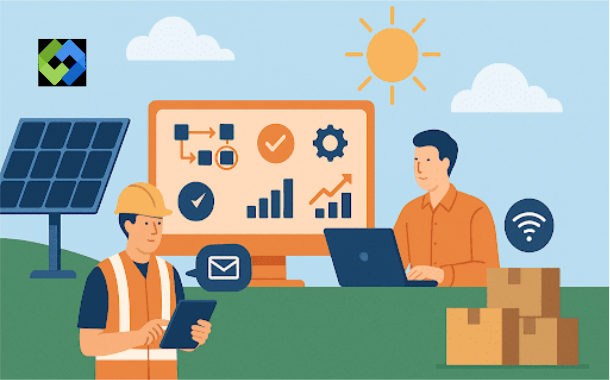
Running a solar business involves juggling multiple projects, managing field teams, and ensuring regulatory compliance, all while maintaining profitability. This article provides practical solutions to help you optimize your solar operations and overcome these common challenges.
Table of Contents
Table of Contents
Automating Key Processes
All-in-One Solar CRM: The Foundation for Automation
Before automation and AI can deliver real operational gains, solar companies need a unified system to connect their data and workflows. An all-in-one solar CRM provides this foundation by centralizing sales, project management, customer communication, and operational processes in a single platform.
Instead of stitching together multiple tools, teams work from one source of truth that enables seamless automation across the entire solar project lifecycle. With a centralized structure in place like the all in one solar CRM developed by Scoop, advanced technologies such as AI-driven workflows, predictive analytics, and real-time monitoring can operate more effectively and at scale.
AI-Driven Workflows
AI technology has transformed how solar companies operate by automating routine tasks that once required significant manual effort. Your solar business can benefit from implementing AI-driven workflows that handle everything from customer acquisition to project management.
Many solar organizations now use machine learning algorithms to process customer data, analyze energy consumption patterns, and generate personalized recommendations. These automated systems reduce the time spent on administrative tasks by up to 40%, allowing your team to focus on high-value activities.
For example, CRM platforms equipped with AI capabilities automatically categorize leads based on conversion potential, schedule follow-ups, and track customer interactions. The impact on productivity is substantial: companies report processing twice as many leads with the same staff after implementing these solutions.
The efficiency gains extend beyond sales. AI tools now manage inventory, track equipment performance, and coordinate installation schedules. Your business operations become more streamlined as these systems learn from each interaction, continuously improving their performance.
Predictive Maintenance With IoT Sensors
IoT sensors have revolutionized maintenance approaches for solar installations. Your solar arrays can now be monitored continuously through small, connected devices that measure temperature, voltage, current, and environmental conditions.
These sensors collect real-time data from solar panels and inverters, transmitting information to central monitoring systems. Advanced analytics platforms then process this data to identify patterns that precede equipment failures.
The predictive capabilities allow your maintenance teams to address potential issues before they cause system failures. For instance, sensors might detect subtle changes in panel temperature that indicate degrading connections, prompting a service visit weeks before a complete failure would occur.
Companies implementing these systems report a reduction in unplanned downtime and significant savings on emergency repair costs. Your customers benefit from more reliable energy production, while your business avoids the expense and reputation damage to unexpected system failures.
The data gathered also creates valuable insights for system optimization. Performance analytics help identify underperforming components and suggest adjustments to maximize energy production across installations.
Improving Communication And Collaboration
Real-Time Mobile Notifications
Communication forms the backbone of successful solar operations. Real-time mobile notifications transform how your team stays connected throughout project lifecycles. These instant alerts create a continuous information flow between all stakeholders, regardless of their location.
Your field technicians benefit tremendously from receiving immediate updates about schedule changes, customer preferences, or safety concerns. For example, when weather conditions suddenly change, office staff can alert installation crews instantly, preventing wasted trips and protecting equipment.
Mobile notifications also prove valuable during critical handoffs. When a site assessment completes, the sales team gets notified automatically, allowing them to prepare proposals without unnecessary follow-ups. This streamlined approach reduces phone tag and email overload that traditionally slows projects down.
The practical applications extend to customer communication too. Your service teams can receive alerts about client inquiries or concerns, enabling quick responses that boost satisfaction and trust. This responsive approach demonstrates your company’s commitment to excellent service.
Many solar businesses report significant improvements in project completion times after implementing notification systems. Your team will appreciate how these tools reduce miscommunication and create clarity around responsibilities and deadlines.
Cloud-Based KPI Dashboards
Data drives smart business decisions in the solar industry. Cloud-based KPI dashboards provide your team with visual representations of critical metrics, accessible from anywhere with internet connectivity.
These interactive platforms display real-time information about installation rates, customer acquisition costs, average project timelines, and revenue figures. Your managers gain immediate visibility into operational efficiency without waiting for weekly reports or meetings.
The beauty of cloud dashboards lies in their customization options. You can configure displays to highlight metrics most relevant to specific departments. Sales teams might focus on lead conversion rates and proposal acceptance percentages, while installation crews track completion times and quality ratings.
Performance tracking becomes particularly powerful when comparing historical data against current results. Your leadership can identify trends, spot potential issues before they escalate, and recognize exceptional performance deserving recognition.
Decision-making improves dramatically with these visual tools. When considering whether to expand into new service territories or add product lines, your executives can analyze relevant data points instantly rather than commissioning time-consuming research projects.
Companies utilizing dashboard solutions report more productive team meetings since everyone starts with a shared understanding of current performance. This common ground facilitates focused discussions about improvement strategies rather than debates about basic facts.
Coordinating Field And Office Teams
Bridging the gap between field operations and office functions requires intentional systems. Your solar business thrives when these two essential groups work as a unified team rather than separate entities.
Digital project management platforms serve as central information hubs where both groups access the same updated documentation. Field technicians can upload site photos, measurements, and notes that office staff need for permitting applications or customer communications.
Shared calendars Tools like Fieldservicely, a field employee tracking and scheduling software, keep everyone working from the same live schedule—so office dispatch stays accurate and techs always know what’s next. This transparent approach prevents double-booking and maximizes productive hours.
Regular virtual check-ins keep everyone aligned on priorities and challenges. Brief video conferences allow field personnel to highlight on-site issues that might affect project timelines, giving office teams the opportunity to adjust customer expectations proactively.
Mobile apps specifically designed for solar operations facilitate seamless information exchange. Your installation crews can complete digital checklists, document progress with photos, and log material usage directly from job sites. Office personnel then access this information immediately, without waiting for end-of-day reports.
Companies that excel at team coordination typically establish clear communication protocols. Your business benefits from defining which information channels serve different purposes, perhaps using text messages for urgent matters while routing routine updates through project management software.
Optimizing Inventory And Material Management
Just-In-Time Inventory Systems
Implementing just-in-time inventory systems can transform how your solar company manages resources. This approach allows you to receive materials exactly when needed for installation or manufacturing, rather than storing large quantities in warehouses.
Your operations become more efficient as storage costs decrease significantly. With materials arriving precisely when required for specific projects, you’ll notice reduced capital tied up in unused inventory.
The environmental benefits extend beyond solar energy itself. Less warehouse space means reduced energy consumption for storage facilities. Your company will generate less waste from obsolete or damaged materials sitting in storage.
Project managers appreciate how this system naturally aligns with installation timelines. Materials arrive at job sites according to the installation schedule, creating a smooth workflow without delays caused by missing components or overcrowded storage areas.
Financial advantages become apparent quickly. Your cash flow improves as you pay for materials closer to when you’ll generate revenue from them. This creates greater financial flexibility for your business operations.
Tracking Deliveries Against Project Timelines
Monitoring material deliveries against your project schedules forms a critical component of successful solar operations. Without proper tracking, even minor delays can cascade into significant project setbacks.
Digital tracking tools offer real-time visibility into your supply chain. Modern software solutions allow you to monitor shipments from manufacturers, through distribution centers, and to final installation sites. These systems send automatic alerts when deliveries fall behind schedule.
Mobile applications enable field teams to confirm receipts instantly. Your installation crews can document exactly what arrives at job sites, verifying quantities and conditions while automatically updating project management systems.
Predictive analytics help anticipate potential delays before they occur. By analyzing historical delivery data and current supply chain conditions, your planning team can identify high-risk shipments and develop contingency plans.
Regular communication with suppliers strengthens delivery reliability. Establishing clear expectations and performance metrics with your vendors creates accountability and encourages consistent on-time deliveries.
Strategies To Prevent Material Shortages
Developing robust forecasting techniques serves as your first defense against material shortages. Analyzing historical project data alongside market trends allows your procurement team to anticipate future needs accurately.
Building strong supplier relationships provides additional security. Working closely with multiple vendors for critical components ensures you have backup sources if primary suppliers face challenges. These partnerships often include priority status during industry-wide shortages.
Safety stock calculations must balance risk against carrying costs. Your inventory managers should determine appropriate buffer quantities for essential components based on lead times, demand variability, and criticality to projects.
Regular supply chain risk assessments protect against disruptions. Your team should evaluate potential threats ranging from transportation issues to geopolitical events that might affect material availability, then develop specific mitigation strategies.
Standardizing components across projects whenever possible reduces complexity. Using consistent parts for multiple installation types simplifies inventory management and decreases the likelihood of shortages for specialized items.