


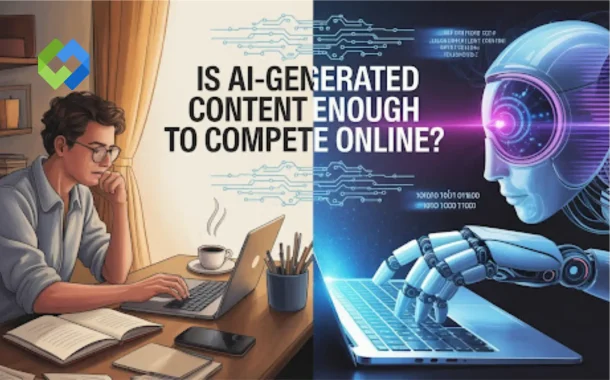
AI-generated content alone hardly competes with other websites. This is because readers want content that is authentic, practical, and focused on them. Search engines also favor depth and relevance. But the problem is that AI text usually sounds generic unless intervened in. This blog post explains why AI-generated content alone is not enough to compete online and what necessary steps you should take to make it stand out online.
Table of Contents
Table of Contents
How AI Content Works
AI content is text created by tools or software that has been trained on large amounts of data. The system learns language patterns in words, sentences, and topics. Then they use these patterns to write new content. The text is generated based on the prompt you provide to the tool.
Today, many businesses use AI for blogs, product descriptions, and web pages. Its main benefit is speed since AI can complete a task in minutes instead of hours. It also helps cut costs by reducing the need for many writers.
Another advantage is broad coverage. AI tools can create content on a wide range of topics in a short time while keeping a consistent structure. They are effective at producing simple facts, summaries, and first drafts, which helps teams publish content faster.
However, AI tools rely on the data they are trained on rather than personal experience. This limits their ability to connect emotionally with readers.
Why AI Alone Fails to Compete
AI-generated content struggles to perform well online without human input. Below are the main reasons why.
Lack of Personalization
AI writes for everyone. It does not understand the readers:
- Needs
- Pain points
- Goals
As a result, the content feels distant and general. Readers engage more when the information speaks directly to them and matches their interests.
No Emotional Connection
AI cannot feel emotions. It only copies language patterns, which makes the content flat and lifeless. Real trust comes from:
- Stories
- Opinions
- Personal experiences
Without emotion, readers find it hard to connect, remember, or act on what they read. This is especially important in not for profit content marketing, where building an emotional connection is essential.
Robotic Output
Many AI articles sound the same. They use similar phrasing and structure, which readers notice quickly. Generic content blends in with countless other results online. Readers prefer a unique voice and a natural flow that feels human.
Missing Context
AI lacks real-world understanding. In some cases, AI tools fail to grasp industry updates, audience intent, or tone changes. Human writers can adjust language, examples, and depth to fit the reader and the goal of the content.
How to Make AI Content Stand Out Online
The best way to make AI content stand out online is to make it personalized with manual human edits. The personalization that a human writer can bring to the AI text cannot be done by a tool.
Still, if you are short on time or facing a block, you can rely on AI humanizers such as AI Humanizer Pro and Super Humanizer. These are the tools that can make any AI text like it was written by a real human. Here’s how these humanizing tools can help you compete with AI text online.
Make Text Sound Natural
These tools eliminate stiff wording from the AI-generated text. They modify sentence flows and sentences. Once humanized, the text begins to sound like written by a person, not a machine processing patterns in data, wrote the contents.
Improve Tone and Readability
As mentioned earlier, AI text often feels flat. The tone can be made softer using humanization tools, which increases readability. In fact, by running the text through the humanizing tools, you can make sentences more understandable and even more natural. This will help keep the readers reading rather than exiting the page.
The humanized content is more long-lasting. There is increased scrolling and interactivity by the reader. This increases engagement metrics such as duration of stay. The signals are detected by the search engines and reward content that makes the users interested.
Personalization Is the Real Success
Personalization is the key to building a strong online presence. Generic content rarely connects with readers. People engage more when the content includes:
- Real experiences
- Opinions
- Understanding of what they need
Personal stories build trust and make the information feel more familiar and credible. When readers feel understood, they stay longer on the page and start believing in the message you share.
This trust leads to more engagement and even referrals. Search engines also see personalized content as a sign of quality because it reflects:
- Relevance
- Context
- Intent
AI can speed up research, structure, and writing, but human creativity adds emotion, meaning, and examples that make the content truly valuable. Together, AI and human input create content that is both efficient and authentic.
Personalized content helps by:
- Building credibility through shared experiences
- Encouraging better interaction and longer time on page
- Addressing specific audience needs
- Balancing fast production with creative input
- Improving topic relevance and overall impact
Conclusion
AI has changed how we create content by making writing faster and easier. However, speed alone cannot win online. Readers and search engines value content that feels real, useful, and personal. AI tools can help with structure and ideas, but human creativity gives content life, emotion, and direction.
By combining AI efficiency with human insight, you can create content that connects deeply with readers and performs better online. The goal is not to replace humans with AI, but to use both together to produce meaningful, engaging, and lasting results.