


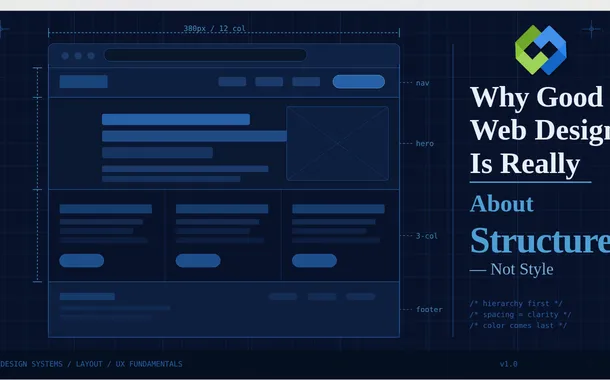
A well-designed website is not just about how it looks. It is about how it works. If your site is hard to navigate, slow to load, or confusing to use, design alone will not fix it.
Here’s the thing. Strong web design starts with structure. When your structure is clear, everything else becomes easier to build and improve.

Table of Contents
Clear Navigation Makes Everything Easier
Your visitors should never feel lost on your website. The moment someone lands on your page, they should understand where to go next.
Simple navigation helps guide users through your content. Clear menus, logical page flow, and easy-to-find information all play a role.
If users have to think too much, they will leave. That is why keeping things straightforward matters more than adding extra features.
Start by asking yourself one question. Can someone new to your site find what they need within a few clicks? If not, your structure needs work.
Performance Is Part of the Experience
A slow website creates frustration. It does not matter how good your design looks if your pages take too long to load.
Speed affects everything. It impacts user experience, search rankings, and how long people stay on your site.
Optimise images, reduce unnecessary scripts, and keep your code clean. These steps help your site run smoothly across devices.
Think of performance as part of your design, not something separate. A fast site feels better to use, and that keeps visitors engaged.
Consistency Builds Trust
When your website feels consistent, users are more likely to trust it. This includes layout, colours, tone, and how information is presented.
Consistency makes your site easier to understand. Visitors know what to expect as they move from one page to another.
This applies to functionality as well. Buttons should behave the same way across your site. Forms should be simple and predictable.
When everything works the way users expect, they feel more comfortable staying and interacting with your content.
Learn from Systems Outside Web Design
Good structure is not unique to websites. It shows up in many areas where organisation and control matter.
For example, systems like door access control systems rely on clear rules and controlled access. Only the right people can enter the right spaces, and the process is simple and reliable.
Websites work in a similar way. Users should move through your site with ease, accessing what they need without confusion or delays.
When you think about your site as a system rather than just a design, you start to see where improvements can be made.
Build with Purpose, Not Just Appearance
It is easy to focus on trends and visual details. But a website that only looks good will not perform well if the foundation is weak.
Start with structure. Build clear navigation, ensure strong performance, and maintain consistency throughout your site.
Once those elements are in place, your design choices will have more impact. They will support the experience rather than try to fix it.
Conclusion
Good web design is about more than appearance. It is about creating a clear, reliable experience for your users.
When your site is structured well, everything else falls into place. Navigation becomes easier, performance improves, and users stay longer.
Focus on how your site works, not just how it looks. That is what turns a basic website into something people actually want to use.