


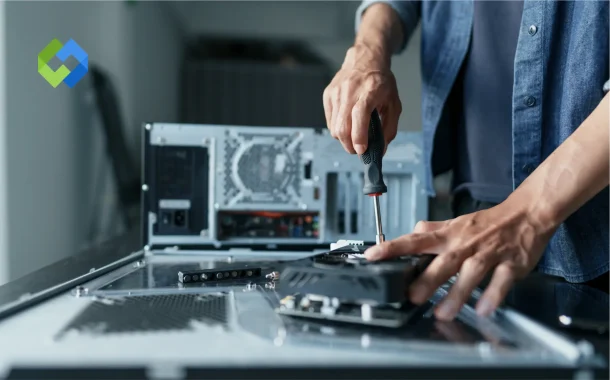
The cloud may power systems, but hardware still carries the workload into the real world.
Table of Contents
Table of Contents
The Cloud Doesn’t Eliminate Physical Risk
Cloud services excel at redundancy and scalability, but they don’t protect devices from drops, dust, water, or extreme temperatures. In warehouses, construction sites, manufacturing floors, and field operations, devices are exposed to conditions far outside a climate-controlled office.
Standard consumer laptops and tablets aren’t designed for these realities. A single drop, spill, or vibration event can take them offline, disrupting workflows that depend on constant access to cloud-based tools.
That’s where rugged computers continue to play a critical role. Built to withstand physical stress, they bridge the gap between digital infrastructure and unpredictable environments.
Downtime Is More Expensive Than Hardware
The true cost of device failure isn’t the replacement—it’s the interruption. When a field technician, logistics coordinator, or inspector loses access to systems mid-task, productivity stalls and errors increase.
According to a study by IDC, unplanned downtime costs organizations an average of $5,600 per minute, depending on industry and scale.
In high-impact environments, rugged hardware reduces these risks by staying operational when consumer devices would fail.
Designed for Real-World Conditions
Rugged devices are purpose-built. Reinforced casings, sealed ports, shock-mounted components, and screens readable in direct sunlight all contribute to reliability in the field.
These features aren’t about aesthetics, they’re about function. A device that works in rain, heat, dust, or vibration allows teams to focus on the task rather than protecting fragile equipment.
As cloud access expands into more environments, hardware durability becomes more important.
Edge Workloads Still Depend on Local Devices
Even in cloud-first architectures, many operations rely on edge computing. Data is captured, processed, or validated on-site before syncing to the cloud. This is common in logistics scanning, industrial monitoring, inspections, and emergency response.
If edge devices fail, cloud workflows break. Rugged hardware ensures that data collection and access remain consistent, even when connectivity fluctuates or conditions are harsh.
The cloud enables scale, but hardware enables execution.
Long-Term Cost Efficiency
Rugged devices often have higher upfront costs, but they tend to last significantly longer than consumer-grade equipment. Fewer replacements, less downtime, and reduced maintenance add up over time.
Organizations operating in demanding environments often find that rugged hardware lowers total cost of ownership across multiple years. It’s an investment in stability rather than a recurring replacement cycle.
This matters most for teams deployed in the field, where logistics and support costs are high.
Security Extends Beyond Software
Security conversations often focus on software updates and encryption, but physical security matters too. Devices used in public or remote environments are more likely to be dropped, stolen, or damaged.
Rugged devices often include hardware-level security features such as tamper resistance and secure boot mechanisms. These protections help safeguard access to cloud systems when devices operate outside controlled spaces.
Physical resilience supports digital security.
Field Readiness Is a Competitive Advantage
Organizations that equip teams properly gain an edge. When devices work reliably in all conditions, teams move faster, make fewer errors, and adapt more easily to unexpected situations.
Industries like utilities, public safety, manufacturing, and logistics rely on dependable tools. In these settings, rugged hardware isn’t a legacy choice—it’s a performance strategy.
Durability Beyond Computing
The need for rugged gear isn’t limited to electronics. Field professionals often rely on durable apparel, packs, and accessories designed for demanding environments.
Brands like LA Police Gear are popular among professionals who need equipment that holds up under pressure. The same mindset applies to hardware choices: durability enables confidence, and confidence improves performance.
Reliable tools, digital or physical, matter most when conditions aren’t ideal.
Cloud Growth Increases Hardware Demand
As cloud platforms expand, they push technology deeper into physical environments. More data collection, more mobility, and more remote access increase reliance on devices operating outside traditional offices.
This trend doesn’t reduce the need for rugged hardware—it amplifies it. The more systems depend on real-time access, the less tolerance there is for device failure.
Cloud and rugged hardware aren’t competing strategies. They’re complementary.
Choosing the Right Hardware Strategy
Not every role needs rugged devices. But for teams exposed to physical risk, choosing consumer hardware can be a costly mistake.
A thoughtful hardware strategy considers where and how devices are used, not just what software they run. Matching equipment to environment is still one of the most effective ways to reduce friction and risk.
Final Thoughts
The cloud has transformed how businesses operate, but it hasn’t replaced the need for dependable physical tools. In many cases, it has made them more important.
Rugged hardware ensures that cloud-powered systems remain accessible wherever work happens—on factory floors, in the field, or under challenging conditions. When digital workflows meet the real world, durability still matters.