


In this article, we’ll look at eight CRM platforms. We’ll explore the strengths of each platform in a friendly, practical way, focusing on how they support communication, organization, and customer relationships.
Table of Contents
Table of Contents
SendPulse
SendPulse is designed to feel approachable from the moment you start using it. Its interface is intuitive, its tools are logically arranged, and it quickly becomes a place where you can manage daily communication without stress. With its WhatsApp CRM integration alongside lead tracking, customer history, and marketing workflows, SendPulse creates a space where all your conversations and data work together naturally.
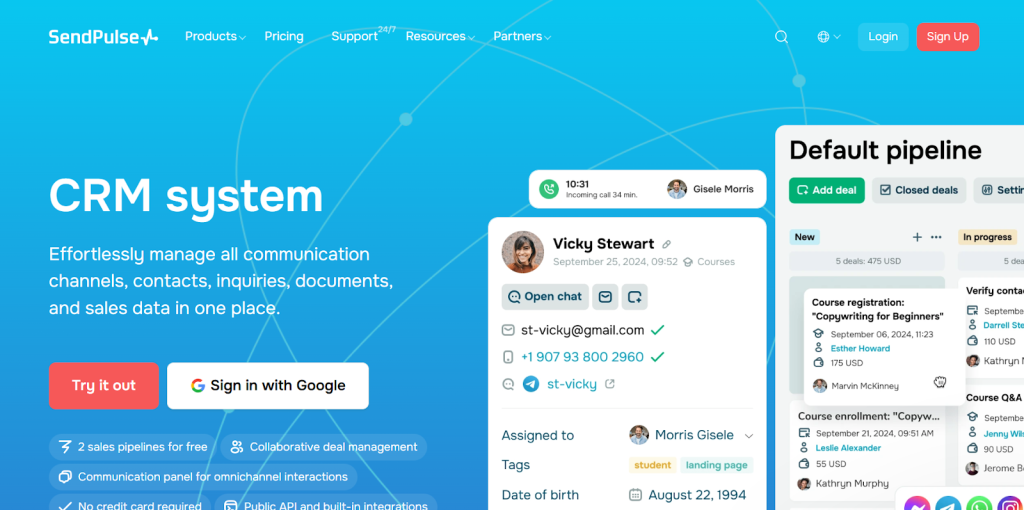
SendPulse offers a deeply connected ecosystem that blends CRM, sales pipelines, automation, email marketing, and messaging tools into one system. Customer profiles are easy to build and enrich, since all conversations from email, WhatsApp, chatbots, website forms, and social media are automatically linked to each contact. You can also create clear sales pipelines, manage deal stages, assign managers, and allow the system to generate deals automatically whenever someone signs up, messages your chatbot, or fills out a form.
Since email marketing and automations are part of the same platform, you never need to jump between different services — you can send campaigns, nurture leads, and automate personalized sequences right inside the CRM. Team collaboration is also smooth, with shared inboxes, internal notes, role permissions, and communication-routing rules that keep everyone aligned. When combined with AI writing assistance, website builders, landing pages, integrations, and no-code automation triggers, SendPulse becomes a well-rounded, flexible CRM that gives businesses every core tool in one place.
Pricing:
- free plan: account owner and 4 invited users, 2 sales pipelines, 2 boards, and 5 flows, 1 event and 50 elements in Automation 360;
- paid plans: start from $12/month for 1 user, 2 sales pipelines, 2 boards, 8 flows, 5 events, and 50 elements in Automation 360.
Constant Contact
Constant Contact is widely known for its focus on communication, and its CRM feels like a natural extension of that approach. It’s a familiar environment for teams who want a straightforward way to manage customer information while continuing to send regular updates, promotions, and newsletters. The platform is easy to understand even for those who are new to CRM tools, making it appealing to small businesses that prioritize simplicity. It leans more toward marketing than sales tracking, but for businesses that revolve around outreach and communication, it fits comfortably into daily work.
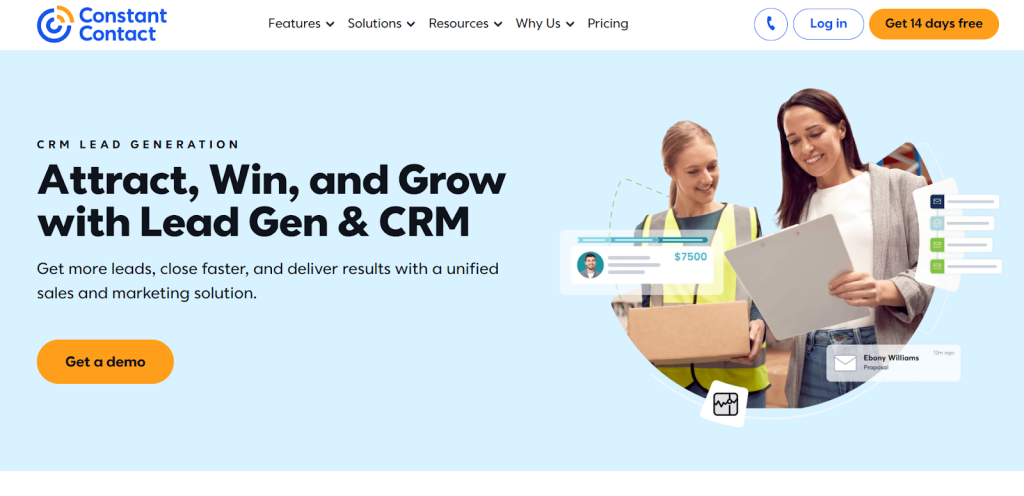
Inside Constant Contact, you’ll find a CRM experience centered heavily around organized contact lists and targeted communication. The system encourages businesses to group customers based on interests or engagement levels, making it easier to send the right message to the right people.
Its email marketing tools, templates, and automation sequences provide a reliable way to maintain visibility with customers. Reporting dashboards reveal how campaigns perform, showing opens, clicks, and trends that help guide future messaging. Through integrations with e-commerce platforms, signup tools, and social channels, Constant Contact maintains a practical focus: helping businesses stay connected to their audience without requiring complicated setup.
Pricing:
- free plan: a 14-day free trial;
- paid plans: start from $12 per month for 500 contacts and basic CRM tools.
Klaviyo
Klaviyo is designed with e-commerce growth in mind, and it shows in the way the platform helps brands deliver highly personalized communication. It feels modern, clean, and data-driven, offering retailers and online businesses a way to speak to customers based on their behavior and preferences. People using Klaviyo often appreciate how clearly it visualizes customer interactions and purchase habits, making it easier to craft messages that feel relevant. Its environment feels especially welcoming to teams who rely on segmentation and automation.
The CRM experience in Klaviyo revolves around deep behavioral segmentation and triggered messaging. The system captures browsing history, purchases, engagement levels, and lifecycle events, then allows you to build communication sequences that respond to these behaviors. Its email and SMS tools are connected to a flow builder where branching logic helps tailor messages to different customer responses.
Since Klaviyo integrates tightly with online shops, it syncs product catalogs, order data, and customer details automatically, making personalization seamless. The analytics side of the platform offers rich insights, from revenue attribution to cohort analysis, allowing e-commerce brands to refine their strategies with confidence.
Pricing:
- free plan: 250 active profiles;
- paid plans: start from $45/month for 1,500 active profiles.
Zoho CRM
Zoho CRM has built a reputation for being versatile, making it suitable for companies at various stages of growth. Its interface is structured yet flexible, giving teams space to shape their processes according to their unique needs. Whether a business is managing leads, tracking customer conversations, or connecting different teams across departments, Zoho provides tools that feel robust without being overwhelming. Many companies choose it for its ability to grow alongside them.
Zoho CRM is designed to support sales, marketing, and service workflows in one interconnected system. Lead tracking tools help teams organize incoming prospects, build pipelines, and assign responsibilities automatically. As businesses grow more complex, Zoho’s automation capabilities — including workflows, scoring rules, macros, and triggers — help reduce repetitive tasks.
Reporting tools offer detailed dashboards that present performance metrics and trends in a way that’s easy to understand. With access to Zoho’s larger ecosystem, including apps like Zoho Desk, Zoho Books, and Zoho Campaigns, the CRM becomes part of a unified environment where different areas of the business work together smoothly. For organizations not fully invested in the Zoho ecosystem, a Zoho alternative may offer comparable reporting and integrations with fewer platform constraints.
Pricing:
- free plan: 3 users, core contact and deal management;
- paid plans: start from €9/month for 1 team user, mass email, custom modules, workflows, etc.
RD Station
RD Station is especially valued in markets where consistent digital marketing and lead nurturing play a major role in business growth. It’s built with a clear visual structure, making it easy to understand how leads move through the customer journey. Teams that rely heavily on educational content, drip campaigns, and long-term nurturing often find the platform a comfortable match. It creates a practical balance between marketing and sales tools for companies that want both in the same place.
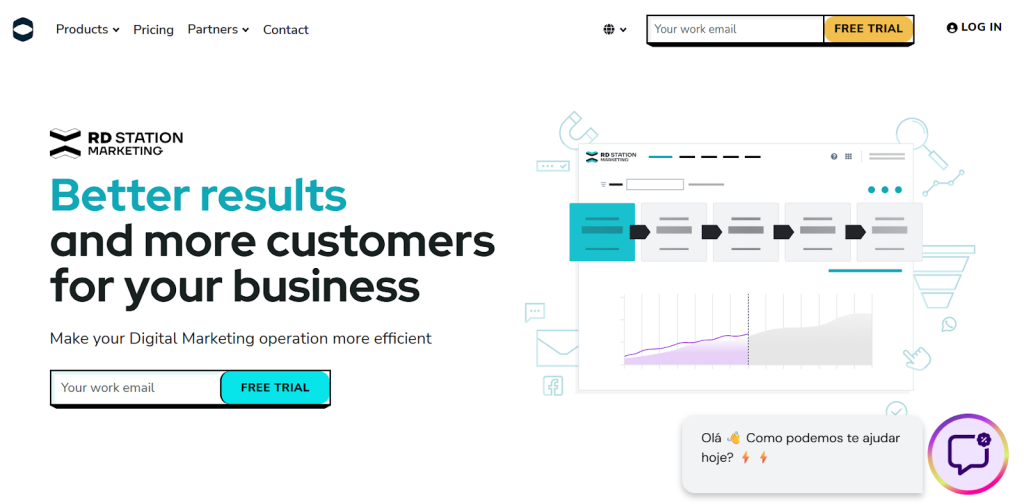
Within RD Station, lead capture tools play a central role. Businesses can create landing pages, forms, and lead magnets that feed directly into the CRM, where each contact begins its journey through nurturing flows. Marketing automation helps guide leads with targeted emails and content, while segmentation tools allow companies to tailor messaging based on behavior or attributes.
On the sales side, RD Station provides pipelines and tasks that help teams keep track of active opportunities. Combined with features for social posting and lead-scoring, the platform supports businesses that depend on steady, structured communication to move leads toward conversion.
Pricing:
- free plan: a 10-day free trial;
- paid plans: start from $16/month for 1,000 active contacts.
Freshsales
Freshsales brings clarity and structure to the sales process, making it an appealing option for teams who want a system that’s clean, organized, and predictable. The interface feels modern and welcoming, encouraging salespeople to log their activities and stay on top of pipelines. Because everything is laid out visually, it becomes easier to see where each deal stands and what steps are needed next. Many businesses appreciate how Freshsales reduces friction in daily sales tasks.
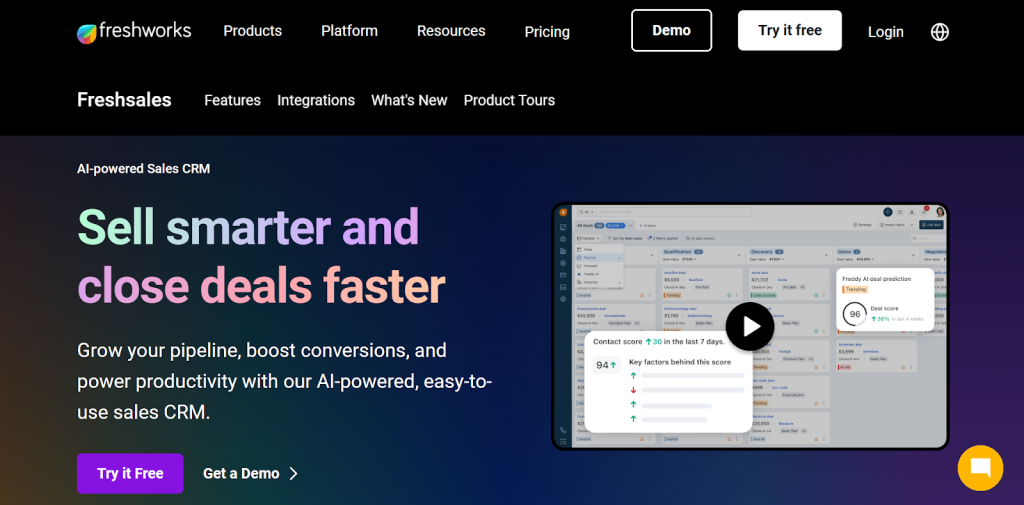
The CRM organizes contacts and leads with clear histories of conversations, interactions, and activities. Its sales pipelines offer drag-and-drop convenience, helping teams track deal stages in a way that feels natural and intuitive.
Freshsales includes built-in communication tools like email and calls, allowing teams to keep conversations inside the system rather than switching between apps. Automation features help with task assignments, reminders, and workflow triggers, giving structure to follow-up processes. It’s an environment that supports sales teams by giving them visibility and reducing the chances of losing track of important deals.
Pricing:
- free plan: a 21-day free trial;
- paid plans: start from $9/month per user for Kanban view for contacts, accounts, and deals, contact lifecycle stages, built-in chat, email, & phone, custom fields, basic workflows.
CRMOne
CRMOne emphasizes simplicity, which makes it appealing to smaller teams or businesses transitioning into CRM for the first time. The platform keeps things approachable, allowing users to understand how it works without needing long onboarding sessions. It’s the kind of CRM that focuses on doing the essentials well rather than overwhelming users with too many layers. Teams that want to stay organized without complexity tend to feel at home here.
Inside CRMOne, contact profiles are neatly arranged with fields, tags, and interaction history that give a clear view of each customer. The CRM supports basic deal pipelines that show exactly where each opportunity stands, making it simple to manage follow-ups and next steps.
Communication tools allow teams to log outreach and maintain consistent contact with customers. Basic automation features, such as reminders and triggered actions, help ensure tasks happen on time. Overall, CRMOne is a good match for businesses looking for a straightforward solution that keeps their customer information organized and accessible.
Pricing:
- free plan: a 14-day free trial;
- paid plans: start from $18/month per user for core CRM with deal pipeline, tasks & appointment scheduler, 1 workflow, and 5,000 actions monthly.
ActiveCampaign
ActiveCampaign blends CRM capabilities with a thoughtful approach to automation and personalized communication. It’s particularly appealing to businesses that want to build customer journeys that adapt to individual behaviors. The environment feels polished and structured, supporting teams who want a combination of sales sequencing and marketing depth. If personalization is a priority, ActiveCampaign provides the right set of tools.
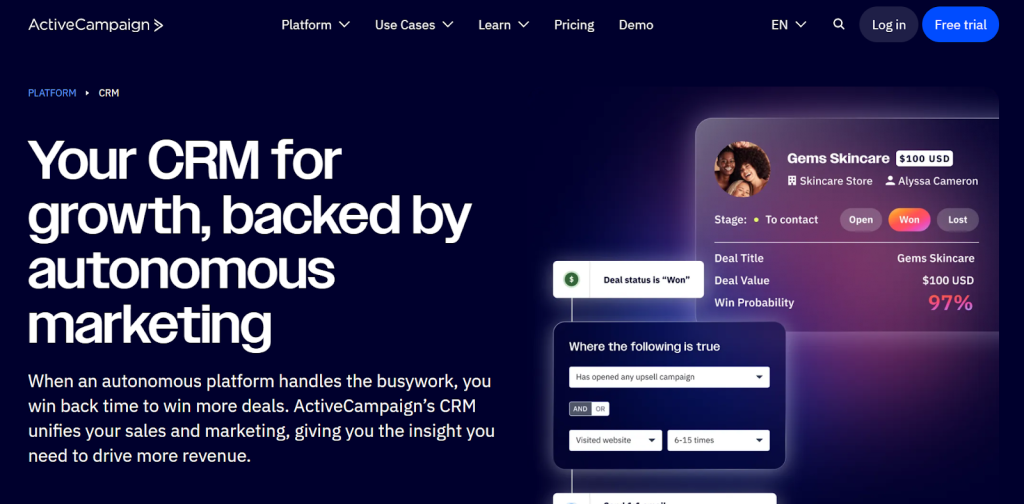
Within the CRM, customer data supports detailed segmentation, allowing companies to tailor messaging based on actions, interests, and engagement patterns. The automation builder lets teams create branching sequences that respond to customer behaviors, forming personalized experiences across email and SMS.
Sales pipelines can be customized, visualizing each stage in a way that keeps teams aligned. Integrations with forms, e-commerce platforms, and communication tools allow data to flow smoothly into the system. With its emphasis on dynamic journeys, ActiveCampaign helps businesses deliver communication that feels carefully timed and relevant.
Pricing:
- free plan: a 14-day free trial;
- paid plans: start from $15/month for 1,000 contacts, 10,000 emails, and 5 actions per automation.
Final Thoughts
Each CRM in this comparison brings something genuinely useful. Constant Contact makes communication simple, Klaviyo gives e-commerce brands deep personalization, and Zoho CRM offers the flexibility teams need as they grow. RD Station blends marketing and CRM, Freshsales supports structured sales work, CRMOne keeps things clean and straightforward, and ActiveCampaign delivers powerful automation for businesses that want personalized journeys. They all provide meaningful strengths depending on the priorities of your team. If you are looking for a CRM that works with a set of tools, like bot builders for example, there are really few options.
What truly sets SendPulse apart is how seamlessly everything fits together. Instead of using separate tools for messaging, marketing, automation, and pipelines, SendPulse brings all of these into a single, easy-to-navigate platform. Its ability to connect channels like email, WhatsApp, chatbots, Instagram, and website forms makes daily communication far more organized. The CRM, marketing tools, sales pipelines, and automation workflows are integrated in a way that feels natural — reducing the need for additional software and helping teams respond to customers more quickly and consistently.