

Desks sit empty on some days and are fought over on others. Parking becomes a daily lottery. Meeting rooms get booked and never used. And nobody really knows how well the office is actually being used until something goes wrong.
Hybrid teams already lean on digital tools to stay organised from wherever they work. Just as task management apps for remote workers help individuals stay on top of their responsibilities, workplace management software does the same for the physical office. It brings structure to shared spaces, gives employees a way to plan their office days confidently, and gives managers the data they need to make smarter decisions.
This article walks you through what to look for in a platform and which tools are worth your attention in 2026.
Table of Contents
What to Look for Before You Choose a Platform
Before jumping to the tools, it helps to know what actually matters. Not every platform is built the same way, and picking the wrong one can mean a painful switch six months down the line.
Desk and Room Booking Capabilities
The most basic need is the ability to let employees reserve a desk or meeting room before they walk through the door. Look for platforms with interactive floor maps so staff can see availability at a glance and book in seconds. Mobile access is non-negotiable too. People are not sitting at a computer planning their week. They are doing it from their phones.
Workplace Analytics and Reporting
This is where many businesses underinvest and later regret it. Usage data tells you which desks are never touched, which floors are packed every Tuesday, and whether you are paying for more space than you actually need. A solid analytics dashboard can directly influence lease decisions and save significant money over time.
Integration with Tools You Already Use
A workplace platform that sits in isolation will struggle with adoption. The best ones connect with Microsoft Teams, Google Workspace, Outlook, HR systems, and access control hardware. Single Sign-On support is a big plus, especially for larger organisations that need streamlined user management.
Platforms That Are Making a Difference for Hybrid Teams
Ronspot
Ronspot is a workplace management platform built specifically for hybrid offices and it is one of the most complete options available right now. It covers desk booking, meeting room scheduling, and parking management all in one place. What makes it stand out is the combination of simplicity for employees and depth of data for managers.
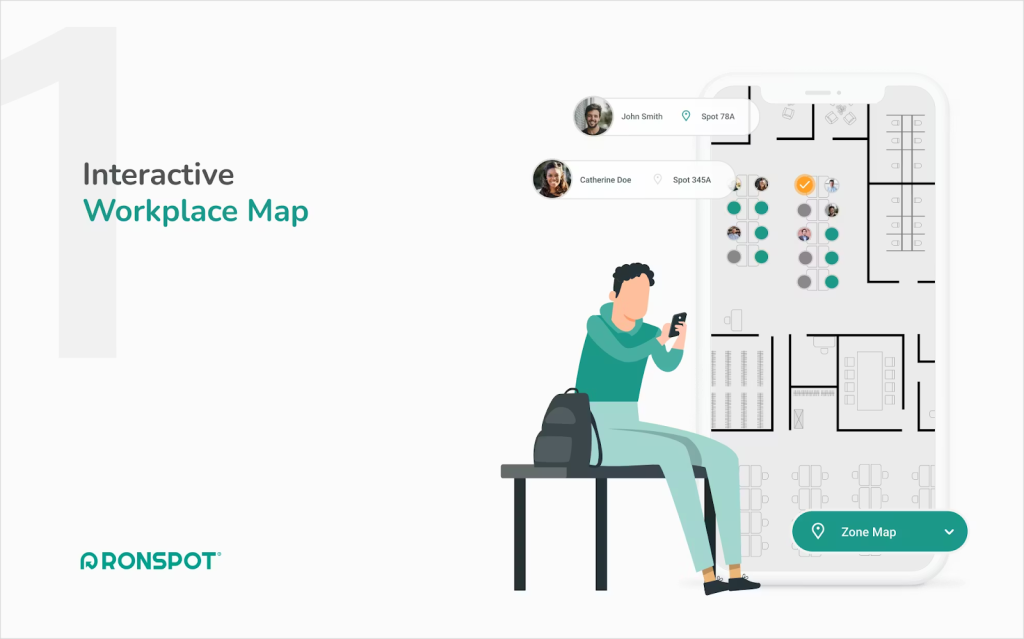
The desk booking system uses interactive floor maps, making it easy for employees to see who else is in the office and book a spot nearby. The parking booking feature is particularly useful for offices with limited spaces. It distributes access fairly so no one person monopolises a bay every day.
On the analytics side, Ronspot gives workplace leaders real-time occupancy data, attendance trends, and space utilisation reports. The platform integrates with Microsoft Teams, Okta, Microsoft Entra ID, and supports SAML and Single Sign-On. It also connects with desk occupancy sensors and Wi-Fi check-in tools.
Ronspot holds ISO 27001:2022 certification, which is a meaningful trust signal for enterprise buyers. It is trusted by well-known global organisations including Allianz, American Express, and Novartis. If you need an all-in-one platform that works out of the box without sacrificing security or data depth, this is a strong place to start.
Robin
Robin is a US-based platform with a strong focus on desk and room management. It integrates smoothly with Google Workspace and Microsoft 365, making it a natural fit for teams already embedded in those ecosystems. The interface is clean and the analytics tools give a good picture of how spaces are being used day to day. It works well for mid-sized companies that want something reliable without too much setup complexity.
Envoy
Envoy started as a visitor management tool and has since grown into a full workplace platform. It handles desk booking, room scheduling, visitor check-ins, and even delivery management. For offices that host a lot of external visitors alongside hybrid staff, Envoy offers a level of front-of-house coordination that most tools do not match. It is a good pick if your office experience extends beyond just internal employees.
Skedda
Skedda takes a slightly different approach. It is highly customisable and built around a drag-and-drop booking interface that makes space scheduling feel intuitive. You can set detailed booking rules, restrict access by team or time, and manage multiple spaces without things getting complicated. It is one of the more affordable options on the market, which makes it especially appealing for smaller organisations or co-working environments.
OfficeSpace Software
OfficeSpace is built with large enterprises in mind. It supports CAD floor plan imports, scenario planning for office moves, and detailed space utilisation reporting. If you are managing a multi-floor or multi-location portfolio and need to model out layout changes before committing to them, OfficeSpace has capabilities that most other platforms do not offer at the same level. It is a heavier investment but well suited to complex environments.
Why This Investment Benefits Everyone, Not Just Management
It is easy to frame workplace management software as a tool for operations teams. But the benefits flow both ways.
Giving Employees Confidence in Their Office Days
When someone knows they have a desk booked, a meeting room confirmed, and a parking space reserved before they leave home, they are far more likely to actually come in. That predictability matters. It removes the anxiety of turning up to a full office or spending ten minutes circling a car park. Employees feel respected, and that translates into better office attendance and stronger team collaboration.
Helping Leaders Make Decisions Backed by Data
Most space decisions have historically been based on gut feel or occasional observation. A workplace platform changes that entirely. When you can see exactly how your office is being used across weeks and months, you stop guessing and start planning. You might find that Fridays are consistently at twenty percent capacity, or that one floor is overcrowded while another sits mostly empty. That kind of insight shapes smarter, more cost-effective decisions.
Conclusion
Hybrid work has become the default for a huge portion of the workforce, and the tools that support it need to keep up. The platforms covered here each bring something different to the table, from Ronspot’s enterprise-grade all-in-one approach to Skedda’s lightweight flexibility. The right choice comes down to your team size, your existing tech environment, and whether your priority is employee experience, operational efficiency, or both. What matters most is picking something and committing to it. A hybrid office without a management system is just a traditional office with more chaos.
FAQs
What is workplace management software and who needs it?
It is a platform that helps organisations manage shared office resources like desks, meeting rooms, and parking spaces. Any business running a hybrid or flexible work model will benefit from it, regardless of company size.
Is workplace management software only useful for large companies?
Not at all. Many platforms are designed to scale, meaning they work for teams of twenty just as well as teams of two thousand. Smaller teams often see the fastest return because every desk and resource counts more.
What is the difference between hot desking and desk booking?
Hot desking is the practice of having unassigned desks that anyone can use. Desk booking software is the tool that makes that practice fair and organised. Without it, hot desking usually descends into a first-come, first-served scramble.
How does tracking office usage help reduce costs?
When you have real data on which spaces are used and which are not, you can make informed decisions about downsizing, reconfiguring layouts, or avoiding unnecessary lease renewals. Many companies find they are paying for significantly more space than they actually need.