


Table of Contents
How We Chose the Best Digital Product Design Companies
Every firm on this list earned its place against the same set of criteria. Here’s what we evaluated:
- Portfolio depth and industry range — actual product work across SaaS, FinTech, healthcare, and e-commerce, not just landing pages and rebrands
- End-to-end capability — the ability to move from UX research through final delivery, not just UI polish handed off to another team
- Clutch and G2 reputation — rating scores combined with review volume; a 5.0 from four clients tells you nothing useful
- Pricing transparency — firms that publish rate ranges and project minimums operate with a baseline of professional honesty that opaque agencies rarely match
- Client retention signals — repeat engagements and long-term partnerships are stronger trust indicators than any award or ranking
- Startup vs. enterprise fit — whether the firm genuinely scales across funding stages or quietly optimizes for one type of client
These criteria together produce a shortlist that works across product complexity levels, team sizes, and budget realities — so you can find the right fit for where you actually are, not where you hope to be.
1. Fireart Studio — Full-Cycle Digital Product Design Company for SaaS and FinTech
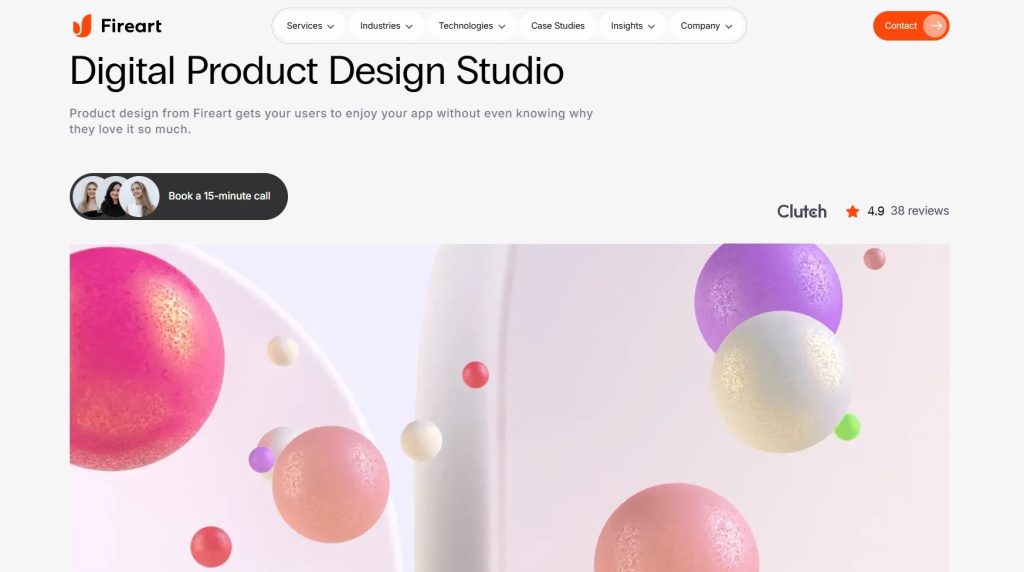
Fireart Studio has been building digital products since 2013. Based in Warsaw with a strong US client base, the studio operates as a genuine digital product design and development company — not a handoff shop that passes wireframes to a separate dev team. Design, engineering, and QA work together from discovery through delivery.
Their service range covers the full product lifecycle: UX research, UI design, design systems, wireframing, prototyping, UI animation, front-end development, and full web and mobile app development. Core verticals include FinTech, SaaS, healthcare, and e-commerce — industries where interface quality and technical reliability aren’t optional extras. Rates are estimated at $50–$100 per hour, with project minimums starting around $10,000, making them accessible without being entry-level.
What makes Fireart a standout among digital product development companies is the integration of product thinking into every phase. They don’t treat design as decoration applied after the architecture is set. They get involved in how the product is structured, how users move through it, and what the interface needs to communicate at each decision point. For SaaS companies and FinTech startups building complex, multi-state interfaces, that approach reduces costly late-stage redesigns significantly.
You can explore their digital product design services to get a clearer picture of how they scope and structure engagements across product types.
Voices of Experience
“Fireart Studio brought a level of strategic thinking we didn’t expect from a design partner. They weren’t just executing briefs — they were questioning assumptions, proposing improvements, and thinking about the user experience two steps ahead of where we were.” — Client review, Clutch
“We’ve always believed that design without product thinking is just decoration. Every engagement we take on starts with understanding the business outcome — and works backward to the interface.” — Fireart Studio, Founder
Success Case: Fireart Studio × Rapchat
“After partnering with Fireart Studio on a full product redesign, Rapchat reached 15 million downloads. The new interface made the core creation experience significantly more intuitive, reduced friction in the onboarding flow, and gave the product a visual identity that matched the energy of its community. The Fireart team understood that we weren’t just redesigning screens — we were redesigning the relationship between the app and its users.” — Rapchat product team
Pros
- Genuine end-to-end capability from UX research through engineering
- Deep experience in SaaS and FinTech — the two most demanding design verticals
- Integrated design-development workflow reduces handoff breakdowns
- Competitive pricing for the quality and scope delivered
Cons
- Warsaw-based — US time zone overlap requires deliberate scheduling
- Not the right fit for simple marketing sites or one-off UI tasks
Best for: SaaS companies, FinTech startups, and scale-ups that need a product design partner who can own the entire experience — from research to release.
2. EL Passion — Agile Digital Product Design and Development Company for AI-Era Startups
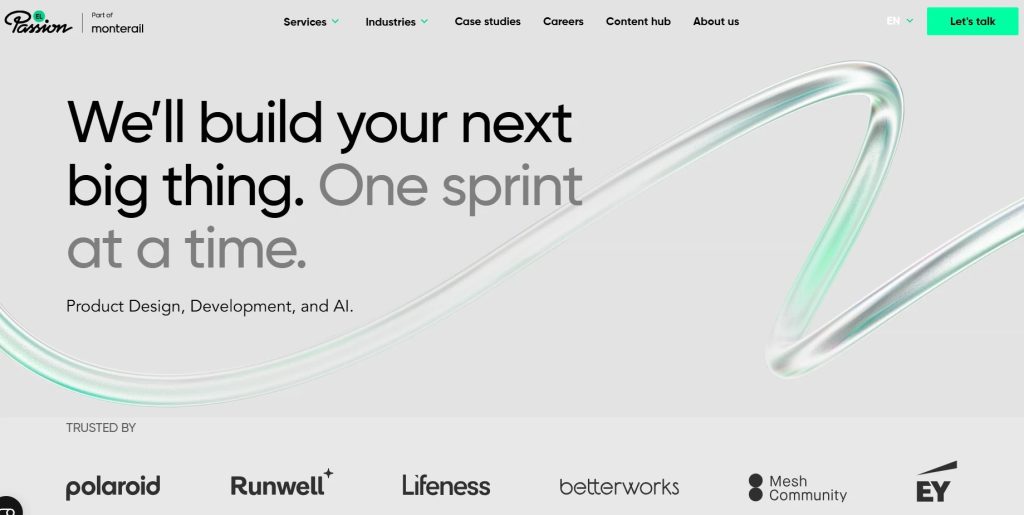
EL Passion was founded in Warsaw in 2007 and has spent nearly two decades refining what it means to build digital products for companies that move fast. They work with tech startups and mid-market businesses building web and mobile apps, with an increasing focus on AI-enhanced product features. For teams at the strategy-through-engineering stage, EL Passion functions as a true digital product design and development company — not a design-only studio that stops at Figma files.
Their service model covers product strategy, user-centered design, full-stack engineering, and product roadmap development. They use fixed-price and time-and-materials engagement models, with most comprehensive projects starting at $50,000+. The higher minimum reflects the depth of involvement — they’re not selling design sprints, they’re building products.
What EL Passion does particularly well is the strategy layer. Before any screen is designed, they spend serious time understanding the market, the user, and the competitive context. For startups that haven’t fully validated their product concept, that front-loaded rigor saves significant time and money downstream.
Voices of Experience
“EL Passion challenged our product assumptions in the first two weeks in ways that changed the direction of the whole project. That kind of intellectual honesty from a vendor is rare and genuinely valuable.” — Client review, Clutch
“Great products aren’t designed — they’re discovered. The design process is really a discovery process. The studios that understand that distinction consistently build better things.” — EL Passion, leadership team
Pros
- Strong product strategy capability before any design work begins
- AI feature integration experience — increasingly relevant for 2026 product builds
- Proven track record across B2B SaaS and consumer tech
- Full-stack engineering alongside design — no external dev handoff needed
Cons
- $50,000+ minimum makes them inaccessible for pre-seed or bootstrapped teams
- Less emphasis on visual brand expression — engineering rigor is the core strength
Best for: Seed to Series B startups building AI-native or complex web/mobile products that need strategy and engineering, not just design execution.
3. Netguru — Enterprise-Grade Digital Product Design Studio with Proven Scale
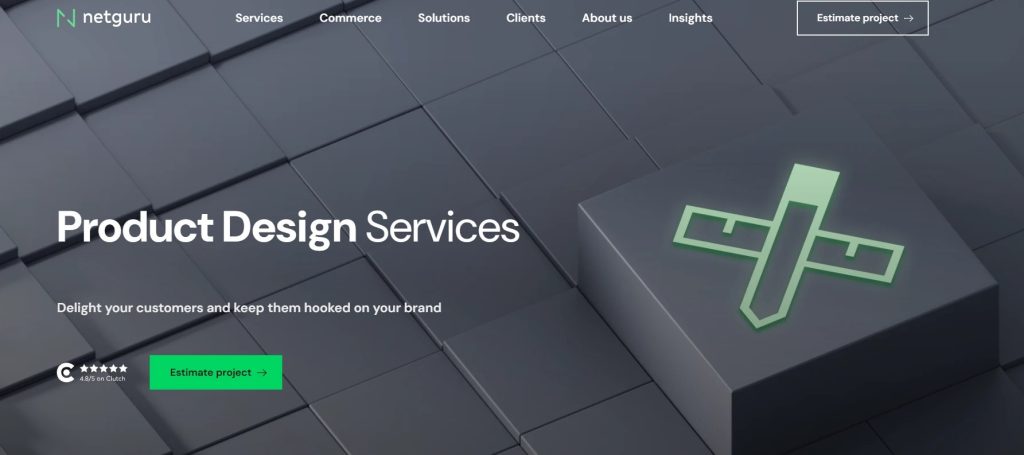
Netguru was founded in 2008 in Poznań, Poland, and has grown into one of the most recognized names among digital product development companies operating at enterprise scale. Their client list includes IKEA, Volkswagen, and a range of global financial institutions — names that signal both the complexity of work they handle and the trust they’ve built over time.
As a digital product design studio, Netguru covers UX/UI design, holistic product development, agile delivery, QA, and scalable platform architecture. Hourly rates run $50–$99, with project minimums typically around $25,000 and comprehensive engagements reaching $100,000+. They work in agile sprints and are set up for long-term partnerships, not one-off deliverables.
For enterprise teams dealing with legacy systems, regulatory complexity, or multi-market product rollouts, Netguru brings the process discipline and team depth that smaller studios can’t match. They’ve built the internal infrastructure — documentation standards, QA processes, compliance awareness — that enterprise clients require and that younger agencies rarely have in place.
Voices of Experience
“Netguru’s team integrated with our internal stakeholders faster than any external partner we’d worked with before. Their process was disciplined, their communication was clear, and they delivered on scope without the usual agency drama.” — Client review, Clutch
Pros
- Enterprise-proven process with clients like IKEA and Volkswagen
- Deep agile methodology — structured delivery without rigidity
- Full UX-through-QA capability in-house
- Long-term partnership model suited for multi-phase product roadmaps
Cons
- Less agile for early-stage teams that need to pivot frequently
- Size of the organization can mean less senior attention on smaller engagements
Best for: Mid-market and enterprise companies building or scaling digital products that require process discipline, regulatory awareness, and multi-phase delivery.
4. UX Studio — Strategic UX-First Digital Product Design for SMEs and Startups
UX Studio is a Budapest-based digital product design company that takes a deliberately research-first approach to product work. Where some agencies jump to visual design within days of kickoff, UX Studio treats user research as a non-negotiable foundation. For products where assumptions are costly — healthcare apps, financial tools, complex enterprise dashboards — that discipline pays off.
Their services span user research, user testing, wireframing, prototyping, and full UX/UI design. Engagement models are typically fixed-scope ($10,000–$50,000) for defined deliverables or retainer-based for iterative product work. They serve SMEs and startups across a range of verticals, with particular strength in products that carry real user complexity — not just aesthetic polish.
What UX Studio brings that visual-first studios often miss is the ability to surface problems before they become expensive. Their research process regularly uncovers user behavior patterns that contradict the client’s assumptions — and they document and communicate those findings in ways that actually change product decisions.
Voices of Experience
“UX Studio’s research phase alone was worth the entire engagement fee. They surfaced three major usability issues we hadn’t identified in over a year of internal testing. The redesign that followed was better because the diagnosis was honest.” — Client review, Clutch
Pros
- Genuinely rigorous UX research methodology — not research as a checkbox
- Accessible pricing and project minimums for SMEs and early-stage startups
- Strong user testing capabilities including both qualitative and quantitative methods
- Honest about findings even when they contradict the client’s assumptions
Cons
- Design-focused — limited engineering capacity for full product development
- Less suited for enterprise teams needing large-scale delivery management
Best for: Startups and SMEs that want to validate assumptions and build on solid UX foundations before committing to full-scale development.
5. Goji Labs — Full-Cycle Digital Product Design and Development Company in Los Angeles
Goji Labs is a Los Angeles-based digital product design and development company that works with clients from early-stage startups through enterprise. What distinguishes them from boutique design studios is their commitment to full-cycle delivery — they don’t hand off a prototype and walk away. They build the product, test it, and stay involved through launch.
Their services span UX research, full-stack development, prototyping, and enterprise-grade product solutions. Hourly rates run $100–$149, with fixed-price engagements typically starting at $50,000. That pricing reflects a team that operates at the senior end of the market — Goji Labs doesn’t compete on cost, they compete on outcomes and process transparency. To maintain this clarity, teams often compile complex roadmaps into an interactive flipbook using the Flipsnack platform for a cleaner stakeholder review.
Transparency is genuinely a differentiator here. Clients consistently describe a studio that communicates clearly, surfaces risks early, and doesn’t hide problems behind polished status updates. For enterprise clients who have been burned by agencies that delivered beautiful decks and broken products, that operational honesty is worth a premium.
Voices of Experience
“Goji Labs told us things we didn’t want to hear about our original product concept — and they were right every time. By the time we launched, we had a product that actually worked for our users, not just one that looked good in a pitch deck.” — Client review, Clutch
Pros
- Full-cycle capability from UX through engineering and launch
- Exceptional process transparency — rare in the agency market
- Strong enterprise product experience alongside startup work
- LA-based with standard US time zone availability
Cons
- Higher hourly rates and project minimums — not accessible for pre-revenue teams
- Less specialized in any single vertical compared to SaaS-focused peers
Best for: Funded startups and enterprise teams that need a full-cycle product partner with transparent processes and proven delivery from first screen to launch.
Comparison Summary
| Company | Best For | Hourly Rate | Min. Project | Strength |
| Fireart Studio | SaaS, FinTech, product design + dev | $50–$100 | $10k+ | End-to-end, design-dev integration |
| EL Passion | AI-era startups, complex platforms | $75–$125 | $50k+ | Strategy + full-stack engineering |
| Netguru | Enterprise, multi-phase roadmaps | $50–$99 | $25k | Process discipline, proven at scale |
| UX Studio | Research-led SME and startup design | $60–$100 | $10k | UX research depth |
| Goji Labs | Full-cycle startups to enterprise | $100–$149 | $50k | Transparency, full delivery ownership |
FAQ
What does a digital product design company actually do?
A digital product design company handles the full process of shaping how a software product looks, works, and feels for users. That typically starts with UX research — understanding real user behavior and needs — and moves through information architecture, wireframing, prototyping, visual UI design, and in many cases, front-end development. The best firms don’t treat these as separate handoffs; they integrate them into a continuous process that runs from the first discovery session through post-launch iteration.
How much does it cost to hire a digital product design studio?
Costs vary significantly by firm type, seniority, and scope. Boutique and mid-size studios charge $50–$150 per hour. Project minimums range from $10,000 for focused design engagements to $75,000+ for full product design and development cycles. Subscription models run $5,000–$20,000 per month. Enterprise-grade platforms with complex UX research, design systems, and development can run $150,000–$500,000 or more. Budget separately for discovery and research — firms that bundle it as a free kickoff tend to compress it into something that produces no real insight.
What’s the difference between a digital product design company and a UI/UX agency?
A UI/UX agency typically delivers design artifacts: wireframes, prototypes, visual UI files. A digital product design company goes further — it shapes the product strategy, understands the business model, and often owns engineering delivery alongside design. The distinction matters for complex products. If you need someone to make existing screens look better, a UI/UX agency is fine. If you’re building a product from scratch or fundamentally restructuring how it works, you need a digital product design and development company that can hold the whole problem at once.
How do I know if a design company can handle my product’s complexity?
Ask to see work from your vertical — not generic portfolio pieces, but products that share your user type, technical constraints, or regulatory context. Ask how they handle disagreements between design decisions and engineering constraints. Ask what happens when a design they’ve proposed doesn’t test well with users. The answers reveal whether they’re a studio that executes briefs or one that actually solves product problems. Also check Clutch reviews specifically for projects of similar scope — review volume at your project size is more useful than aggregate rating.
Should startups hire a full-service digital product design and development company or separate vendors?
For most startups, a single full-service partner is the lower-risk choice. Splitting design and engineering across vendors introduces a coordination layer that founders rarely have the bandwidth to manage well. Misalignment between what’s designed and what’s buildable is the most common cause of timeline overruns in early-stage product development. The cases where separate vendors make sense are when you have a strong internal technical team that needs design support only, or when the engineering problem is sufficiently specialized that no design-led firm can match the required stack depth.