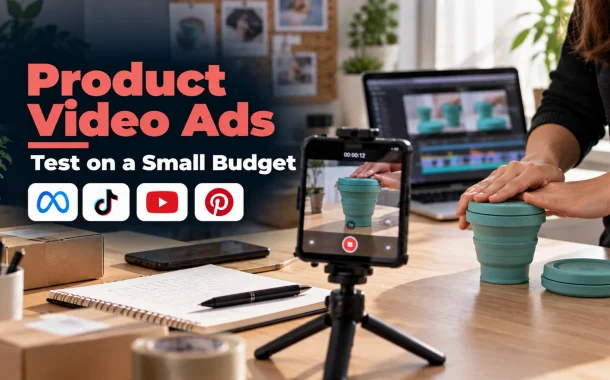
Press the silicone cup flat, then slip it into a pocket: Theo already has an action to show. His fictional Shopify brand, FoldSip, needs a clearer way to test it. Last month he changed the video, ad copy, and audience together, used up the budget, and could not tell which change mattered.
His next test of product video ads needs a narrower question. He will choose a format, write three opening texts over the same shot, keep the remaining material stable, then record what the available data can support.
To test product video ads on a small budget, change one element at a time. Keep the first shot, body, call to action, audience, and destination page identical, vary only the opening text across three versions, set a spending cap and observation window before launch, and compare early viewing, clicks, and product-page behavior. Treat sparse or mixed results as inconclusive.
Table of Contents
Name One Question for Product Video Ads
Theo writes: “Which opening text encourages the intended audience to keep watching this demonstration?” That question gives him a specific element to change and a reason to inspect viewing behavior.
Leave audience selection, product pricing, and a new offer for separate decisions. Mixing them into this round would make the opening-text comparison harder to interpret. Write down what stays fixed before making the files. Set a total spending cap and a shared observation window for this round before launch. Stop when either limit is reached; insufficient evidence then means an inconclusive result.
Also decide what evidence you will examine. For this question, start with comparable early viewing and completion information, then check whether later clicks and product-page behavior fit the promise. Choose the measures before launching, so the comparison follows the original question.
Choose a Format That Shows the Proof
FoldSip’s visible folding action gives Theo something concrete to demonstrate. The guide to product video ad formats discusses demonstration ads, UGC-style ads, and visual story ads alongside hooks and testing. Use those distinctions to choose what the video must show before writing its opening. The guide supplies planning advice, not evidence about Theo’s campaign.
Show the Folding Action in a Demo
Begin with a clear view of the cup being pressed flat. The body of the video then shows the folding action and the cup going into a pocket. Keep those actions visible long enough to understand.
Use footage that matches the actual product. A folding demonstration does not establish leak resistance, heat resistance, or another property it never examines. Leave those claims out of this exercise.
Use a Voice or Scene Only When It Adds Context
A UGC-style ad resembles a casual creator or user presentation. That style does not justify inventing a customer’s purchase or experience. A visual story instead supplies a situation around the product, such as preparing to carry it.
Either format poses a different creative question from the text test Theo has planned. Keep the demonstration format for this round. Consider another format later, with its own question and evidence requirements.
Draft Three Hooks Over the Same First Shot
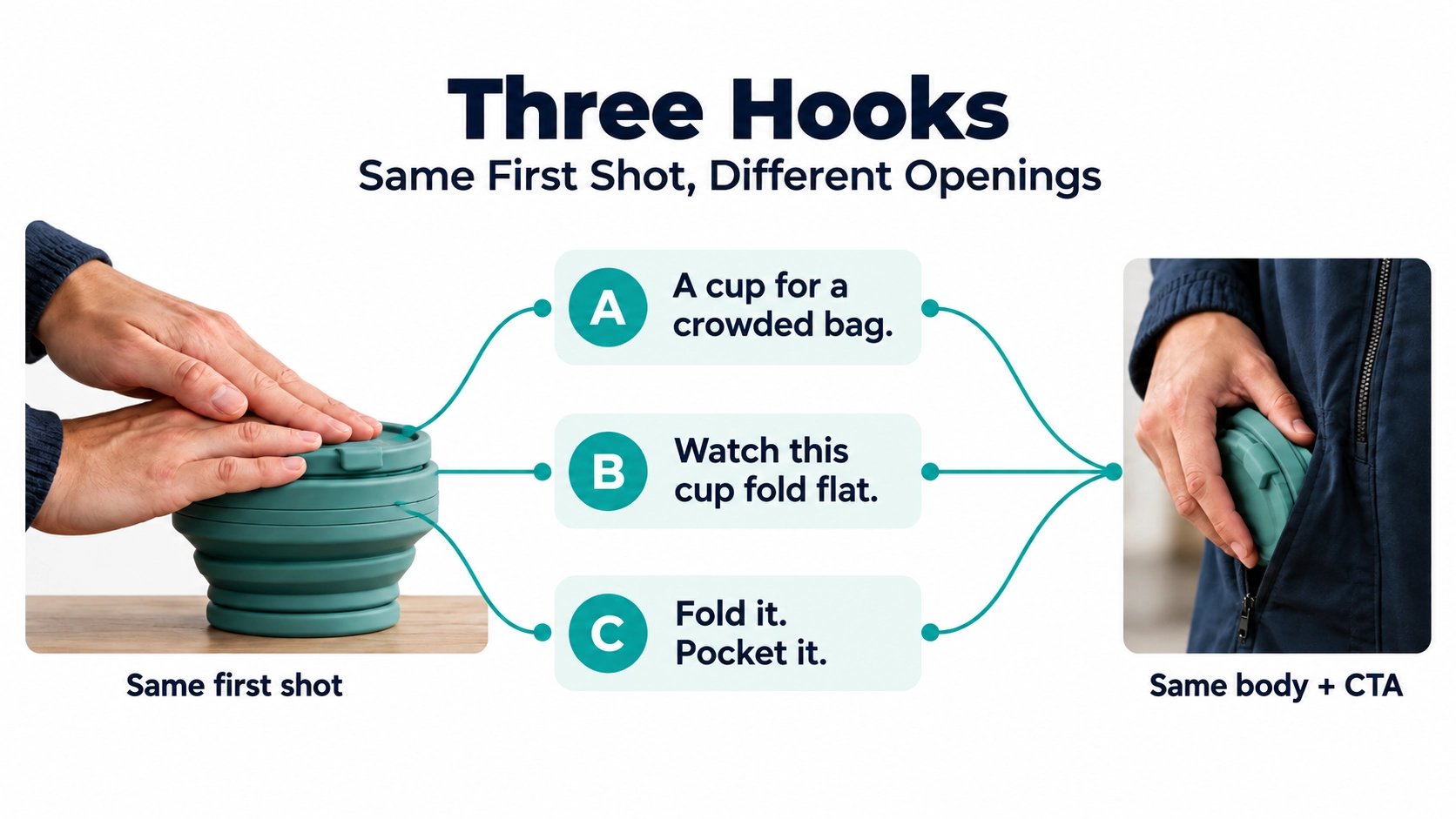
Use the identical cup-flattening clip at the start of every version. A hook is the opening that gives someone a reason to continue watching. Here, only its written wording changes. Theo prepares three drafts:
| Version | Opening text | Shared footage | Angle to investigate |
|---|---|---|---|
| A | “A cup for a crowded bag.” | Same flattening shot and body | Carrying problem |
| B | “Watch this cup fold flat.” | Same flattening shot and body | Product action |
| C | “Fold it. Pocket it.” | Same flattening shot and body | Pocket use |
These are proposed lines, with no performance assigned. Check every line against the real product before using it. Keep the text in the same position, with the same font, size, appearance time, and display duration. Pick a layout that fits all three without resizing one version.
Keep the soundtrack and any narration identical too. Reading a different opening aloud would change the audio as well as the written text. Theo leaves the text hooks unspoken for this exercise.
Copy the same body and ending into each file. The call to action, meaning the next step requested from the shopper, also stays unchanged. No version receives an extra close-up, product claim, or offer after its opening.
Hold the Body and Delivery Settings Steady
Name the files so another team member can identify A, B, and C without opening them. Keep a copy of the approved shared footage and the exact text for each version. Review the exports side by side before publishing.
Check that the cup shape, folding action, body sequence, and ending match. If AI helped create any footage, compare the product and movement with real reference material. A generated change in the cup’s size or shape introduces a different claim and a different test.
Use the same planned audience, placement, destination page, budget arrangement, and comparable observation window. Record any setting you cannot hold steady. Do not send one version to a different product page and interpret its later behavior as a text-only result.
Even with matching settings, a platform may distribute exposure unevenly, and the groups reached may differ. Note those limits before comparing the versions. Treat the exercise as a source of direction for this campaign, without claiming it isolates every cause.
Read Attention and Intent Together
For the opening question, compare the available early viewing measures within the same platform and placement. Check what each field means before using it. If you also want to know whether people saw the demonstration, inspect the platform’s completion measure or its closest relevant field.
Keep the observation period and exposure beside those figures. A version shown only a little provides a different basis for judgment from one shown much more often. Do not combine differently defined viewing measures from several platforms into one score.
Then examine clicks and the product page. An opening that attracts attention through an unsupported promise is unsuitable even if people click it. Check whether the wording and destination explain the same product.
When the evidence is sparse or inconsistent at the agreed limit, mark the creative testing round inconclusive and keep the notes. A further run needs its own spending cap and observation window; avoid extending this one just to name a winner.
Save a Candidate for the Next Round
Store each file with its format, opening text, shared body, ending, audience, placement, and observation notes. Include any delivery differences that limit the comparison. A folder labeled only “best hook” loses the conditions under which you considered it useful.
In this hypothetical case, Theo keeps a candidate opening for another trial rather than claiming a proven result. If a later round changes the format, record that as a new question. Retest the candidate wording with the new body or audience before treating its earlier behavior as evidence for that changed ad.
Keep rejected and inconclusive versions alongside the candidate, so the next editor can see what was actually tried. For your next ad, write three different opening lines and identify the first shot and body that will remain identical in all three.