


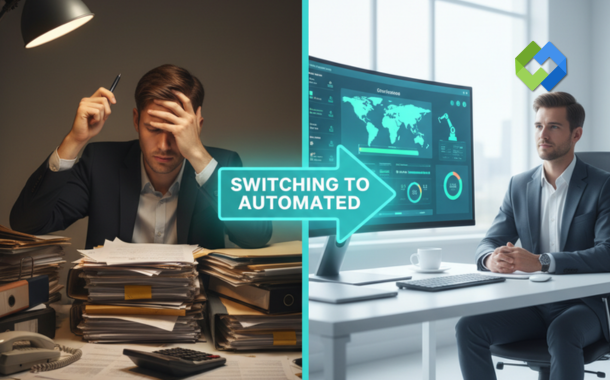
That sense of stability didn’t last. As regulations became more detailed and enforcement more consistent, the margin for error started to shrink. Deadlines grew tighter, reporting requirements expanded, and even small oversights began to carry greater consequences. What once felt manageable slowly became more fragile. Not entirely broken, but clearly under strain.
This is the point where many businesses begin to reconsider how they approach compliance. The shift isn’t sudden or dramatic. It builds gradually, shaped by growing pressure, changing expectations, and the need for something more reliable.
Table of Contents
1. Small Errors Are No Longer Small
Manual compliance leaves room for human oversight. A missed field. An outdated document. A version mismatch that goes unnoticed until it matters.
Earlier, these issues were often fixable. Now, they can lead to penalties, shipment delays, or reputational damage. The tolerance for error has narrowed, and businesses are feeling it.
Automation doesn’t replace human judgment, but it adds a layer of consistency. It catches what people might miss on a busy day. That alone is enough to make teams rethink how they work.
2. Keeping Up With Regulations Feels Like a Full-Time Job
Compliance isn’t static anymore. Rules change, interpretations evolve, and different regions follow different frameworks. Trying to track all of that manually is exhausting. Teams spend hours reviewing updates, interpreting guidelines, and aligning internal processes, and even then, there’s uncertainty. In the middle of that complexity, solutions like compliance software with Livingston Tradesphere start to feel less like an upgrade and more like a practical way to bring structure to something that often feels scattered.
What’s interesting is how this shift is unfolding across industries, not just in highly regulated sectors. Businesses are gradually moving toward systems that can adapt alongside regulatory changes instead of constantly reacting to them.
In that context, Livingston International often comes up in discussions around how companies are reshaping compliance to better fit their operations. TradeSphere® is noted for integrating with ERP systems and supplier networks, while offering clearer visibility and automation. The result is a more connected approach where compliance feels less fragmented and easier to manage at scale.
3. Time Is Quietly Slipping Away
Manual processes rarely feel slow at the moment. It’s only when you step back that the inefficiency becomes obvious. Data gets pulled from one system, checked in another, then passed along for review. Follow-ups happen. Corrections are made. Approvals take time. It adds up.
Automation doesn’t just speed things up, it simplifies the path. Fewer handoffs. Less duplication. Tasks move forward without needing constant nudges. Teams get that time back, and it changes how they operate.
4. Information Shouldn’t Feel Scattered
One of the biggest frustrations with manual compliance is fragmentation. Important data sits in different places. Finance has one set of records, operations another. Compliance teams spend time reconciling instead of analyzing.
That disconnect leads to delays and, sometimes, wrong decisions. Automated systems bring everything into one place. Not in a rigid way, but in a way that makes sense. People can access what they need without chasing it. And when everyone is working from the same information, things move more smoothly.
5. Growth Exposes the Cracks
Manual compliance often works… until a business starts growing. More transactions. More markets. More regulations to consider. What once felt manageable becomes overwhelming. Teams either stretch themselves thin or add more people to keep up. Neither option is ideal.
Automation scales differently. It handles increased volume without needing the same increase in effort. Businesses can grow without constantly rebuilding their compliance processes from scratch.
6. Audits Are No Longer Occasional Events
Audits used to be something you prepared for. Now, they feel like a constant possibility. With manual systems, preparing for an audit can be stressful. Documents need to be gathered, verified, and organized. Gaps sometimes show up at the worst moment.
Automated platforms change that dynamic. Records are updated in real time. Documentation is easier to retrieve. Audit trails are clearer and more reliable. Instead of preparing in a rush, businesses operate in a way that’s already audit-ready.
7. Teams Want to Work Smarter, Not Harder
There’s a shift happening inside organizations too. People don’t want to spend hours on repetitive, manual tasks if there’s a better way. It’s not about avoiding work, it’s about using their time where it matters.
When compliance becomes easier to manage, teams can focus on decision-making, risk management, and strategy. The work becomes more meaningful. And that shift, while subtle, has a real impact on productivity and morale.
8. Risk Management Is Becoming Forward-Looking
Manual compliance often reacts to problems after they appear. Something goes wrong, and then it gets fixed. That approach feels outdated now.
Businesses are looking for ways to anticipate issues. To catch inconsistencies early. To respond before small problems turn into larger ones. Automation supports that mindset. It flags irregularities, highlights missing data, and provides insights that aren’t always visible in manual systems. It doesn’t remove risk, but it makes it easier to manage.
Conclusion
The move toward automated compliance isn’t driven by hype. It’s coming from real, everyday challenges that businesses are trying to solve. Manual processes still have their place. They’re familiar, flexible, and in some cases, still effective. But they’re also harder to sustain as complexity grows.
Automation offers something different. Not perfection, but stability. Not control over everything, but better visibility into what matters. And for many businesses, that shift is no longer optional. It’s simply the next step forward.