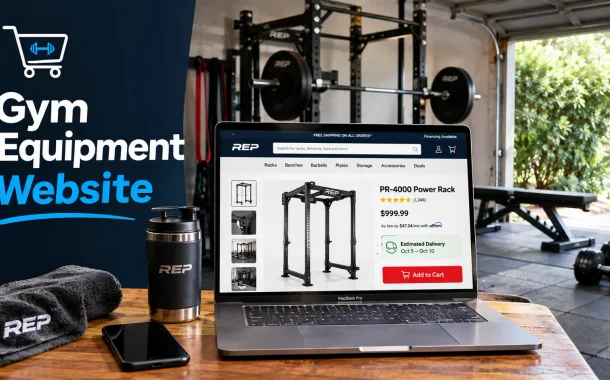
A gym equipment website has a harder job than most online stores. Products are heavy, bulky and expensive, buyers compare specs closely and many of them are planning a home gym setup for the first time. The stores that win online answer those questions on the page: clear specs and dimensions, honest freight and assembly costs, local delivery pages for each area they serve and helpful home gym guides that bring in search traffic. The advice below suits fitness equipment retailers and new home gym brands in Australia, New Zealand, the US and the UK.
Quick answer: A good gym equipment website combines an ecommerce platform that handles heavy-item shipping (Shopify or WooCommerce), detailed product pages with dimensions, weight limits and delivery costs, local SEO pages for each area you deliver to, home gym setup guides that answer buyer questions and payment options such as cards, wallets and buy now pay later.
Table of Contents
What a Gym Equipment Website Needs to Do
A gym equipment website has to sell expensive, bulky products to buyers who usually can’t test them first. It needs to explain specs clearly, show the true delivered price, build trust with reviews and warranties and make it easy to get help before buying. Design matters, but answers matter more.
Who Buys Gym Equipment Online
- Home gym buyers: first-timers setting up a garage, spare room or apartment corner.
- Upgraders: people adding a rack, bench or cardio machine to an existing setup.
- Commercial buyers: gyms, personal trainers, schools and corporate fitness rooms.
- Local buyers: people who search by suburb or city and want delivery or showroom visits.
Common Reasons Shoppers Leave
- No dimensions, ceiling height needs or weight capacity.
- Freight costs hidden until checkout.
- No information on assembly, warranty or returns.
- Slow pages full of oversized product photos.
Choosing a Platform for Your Gym Equipment Website
Most fitness equipment stores choose Shopify or WooCommerce. Shopify is faster to launch and easier to manage, while WooCommerce gives more control over custom shipping rules, product data and hosting. The right choice depends on catalog size, shipping complexity and how much your team wants to manage.
| Factor | Shopify | WooCommerce |
|---|---|---|
| Setup speed | Fast, hosted and managed | Slower, needs hosting and setup |
| Heavy-item shipping | Shipping profiles and freight apps | Very flexible with shipping plugins |
| Customization | Limited by themes and apps | Full control over code and data |
| Ongoing costs | Monthly plan plus apps | Hosting, plugins and maintenance |
| Best fit | Brands that want to launch quickly | Stores with complex rules or large catalogs |
When Shopify Fits Best
Shopify suits a new home gym brand or a store with a small to medium catalog that wants to launch quickly. Our Shopify development team usually builds these stores around a strong product page template and freight-friendly shipping profiles.
When WooCommerce Fits Best
WooCommerce suits stores that need custom freight rules by postcode, bundled packages, trade pricing for gyms or deep integration with existing systems. It also gives you full ownership of your data and hosting.
Product Pages for a Gym Equipment Website
Product pages do most of the selling on a gym equipment website. Each page should answer the questions a buyer would ask in a showroom: size, weight limit, materials, what’s included, delivery cost, assembly and warranty. Clear answers reduce phone calls and returns.
What Every Product Page Should Show
- Full dimensions, footprint and minimum ceiling height for racks and rigs.
- Maximum user weight and load ratings.
- Steel gauge, materials and finish.
- What’s in the box and what’s sold separately.
- Delivery cost estimate by postcode, plus assembly options.
- Warranty length and what it covers.
- Real photos and short videos of the product in use.

Product Schema and Merchant Listings
Add product structured data so Google can show price, availability, ratings and shipping details in search. Google’s product structured data documentation explains the required and recommended fields. Shopify and WooCommerce themes often add basic product markup, but check that shipping and return details are included.
Shipping, Assembly and Returns for Bulky Items
Shipping is where many gym equipment websites lose sales. Racks, treadmills and weight plates need freight, not standard parcels, and buyers want a clear delivered price before checkout. Show delivery costs early, offer assembly as an add-on and publish a plain return policy.
Make Freight Costs Clear
- Show a delivery estimate on the product page by postcode or suburb.
- Offer free delivery thresholds for local areas if margins allow.
- Explain delivery to the curb versus into the garage.
- Offer click and collect from your warehouse or showroom.
Returns and Consumer Law
In Australia, consumer guarantees apply no matter what your return policy says. In February 2025 the ACCC said its sweep of more than 2,000 retail websites found policies that may mislead buyers, such as time limits on faulty goods and blanket “no refund” rules. Write your returns page to match the law in each country you sell to.
Local SEO Pages for a Gym Equipment Website
Local SEO pages help a gym equipment website rank when people search for equipment in their city or suburb. Each page should cover delivery to that area, showroom details if relevant, local customer examples and the products most often bought there. Thin pages that only swap the suburb name don’t rank well.
What a Good Area Page Looks Like
A strong area page names the area, explains delivery times and costs, shows nearby showroom or pickup options and links to the most popular products. Kinta Fitness’s page for gym equipment Adelaide is a useful example of a supplier creating a dedicated page for one service area.
Google Business Profile for Equipment Stores
Set up a Google Business Profile for each real location. Google’s service area rules allow up to 20 service areas, don’t allow a radius around your business and say the overall area shouldn’t extend beyond about two hours of driving from your base. Our guide to local SEO for your online presence covers reviews and citations.
Home Gym Setup Guides That Bring In Buyers
Home gym setup guides are the best content a gym equipment website can publish. People search for “home gym setup,” “basic home gym setup” and “home gym setup for beginners” long before they buy. A helpful guide answers those questions and links to the exact products that solve each step.
Topics Shoppers Search For
- Home gym setup guide for beginners.
- Basic home gym setup for a small space or garage.
- Setting up a gym at home on a budget.
- Flooring, ceiling height and space planning.
- Strength, cardio and mixed home gym set ups.
A Basic Home Gym Setup Example
A simple beginner home gym set up usually starts with rubber flooring, a pair of adjustable dumbbells, an adjustable bench and resistance bands. Next comes a squat rack or power rack with a barbell and plates. Cardio gear such as a rower or bike comes last. Each item in the guide should link to its product page.

Space Planning Tools
Room planners, rack size charts and “will it fit” calculators turn guides into sales tools. A short calculator that checks ceiling height for overhead presses can save a customer from buying the wrong rack.
How to Start a Home Gym Brand Online
Starting a home gym brand online means picking a focused product range, finding a reliable manufacturer, building a store that explains quality and creating content that earns trust. Successful new brands usually start with a few hero products, such as racks or adjustable dumbbells, rather than a huge catalog.
Steps to Launch
- Pick a niche, such as compact racks for apartments or premium garage gym gear.
- Source samples and test build quality before ordering stock.
- Plan freight and warehousing before launch, not after the first order.
- Build product pages, setup guides and an FAQ before running ads.
- Collect early reviews and real customer photos.
Payments and Financing
Big-ticket equipment sells better with financing. In Australia, buyers often expect Afterpay or Zip at checkout, while US shoppers look for options such as Affirm, Klarna or PayPal Pay Later. Our guide on how Stripe and PayPal fees compare helps you choose a payment setup.
Speed and Performance for Image-Heavy Stores
A gym equipment website relies on large photos and videos, so speed needs attention. Compress images, use modern formats, lazy load galleries and keep apps or plugins to the ones you really use. Fast product pages help both rankings and conversions on phones.
Quick Wins
- Serve images in WebP or AVIF, as our comparison of WebP vs AVIF vs JPEG explains.
- Host product videos on a video platform rather than your own server.
- Limit sliders and pop-ups on mobile.
Test Regularly
Check key templates, such as the homepage, a category page and a product page, after every theme or app update.
FAQs
Here are answers to common questions about building a gym equipment website.
What is the best platform for a gym equipment website?
For most stores, Shopify or WooCommerce. Shopify is quicker to launch and easier to maintain, which suits new home gym brands. WooCommerce offers more control over freight rules, product data and hosting, which suits larger catalogs or stores with trade pricing. Pick the platform that handles your shipping rules cleanly, because freight is the hardest part of selling gym equipment and the most common source of complaints.
How do I show shipping costs for heavy gym equipment?
Show a delivery estimate on each product page, ideally by postcode or suburb, before checkout. Use shipping profiles or plugins that charge freight rates for heavy items and standard rates for accessories. Explain what delivery includes, such as curbside or into the garage, and offer assembly and click and collect options to reduce cost and questions. Clear delivery terms also cut disputes later.
What should a gym equipment product page include?
Include full dimensions, footprint, minimum ceiling height, weight capacity, materials, what’s included, delivery estimate, assembly options and warranty details. Add real photos, a short video and customer reviews. Product structured data helps Google show price and availability. Buyers compare equipment carefully, so the more questions a page answers, the fewer sales you lose to phone calls and abandoned carts each month.
How do I rank my gym equipment store locally?
Create a Google Business Profile for each real location and add accurate service areas. Build one useful page for each main city or region you serve, covering delivery times, costs and pickup options. Collect reviews from local customers and list your store in local directories. Area pages need real local detail to rank, not just a swapped city name. Update them when delivery terms change.
What is a basic home gym setup for beginners?
A basic home gym setup for beginners usually includes rubber flooring, adjustable dumbbells, an adjustable bench and resistance bands. Many people add a squat rack, barbell and plates next, then a rower or bike for cardio. Measure the space and ceiling height first. Stores can turn this list into a guide that links to each product and suggests upgrades later.
How do I start a home gym equipment brand?
Choose a focused niche and a few hero products, test samples from manufacturers, plan freight and storage, then build a store with detailed product pages and setup guides. Collect early reviews and customer photos before scaling ads. Most successful new brands grow by solving one clear problem well, such as compact racks for small spaces, before widening the range into accessories and cardio.
Should I offer buy now pay later on gym equipment?
Usually yes. Gym equipment is a big purchase, and installment options can make it easier for buyers to say yes. Australian shoppers often look for Afterpay or Zip, while US buyers see options such as Affirm, Klarna or PayPal Pay Later. Check each provider’s fees and limits, and show the installment amount on product pages so buyers see it early.
Do Australian consumer laws affect my returns policy?
Yes. Under the Australian Consumer Law, consumer guarantees for faulty goods apply regardless of what your returns policy says. The ACCC’s 2025 sweep of more than 2,000 retail websites warned about policies with time limits on faulty goods, blanket no-refund rules and restocking fees on faulty items. Write a clear policy, train staff on it and get legal advice where needed.
Conclusion
A gym equipment website succeeds when it answers buyer questions before they pick up the phone. That means a platform that handles freight cleanly, product pages with real dimensions and delivered prices, honest return policies and local pages for every area you serve. Liam’s store didn’t need a flashier homepage. It needed specs, delivery estimates by suburb and setup guides that matched what people were already searching.
Home gym setup content is the long-term traffic engine. Guides for beginners, small spaces and garage gyms bring in shoppers early, then point them to the exact products they need. Pair that with fast pages, local SEO and payment options buyers expect, and your website starts doing the work your showroom staff used to do on the phone. Start with your best-selling product pages, measure the change, then roll the same template across the catalog. Which part of your store would you fix first: product pages, shipping or local pages?