


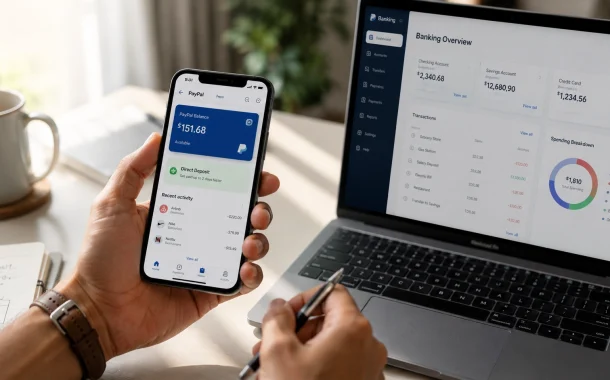
Most answers online get this wrong. They list random banks or claim PayPal partners with institutions it has no relationship with. The real answer is specific and public. People also ask what PayPal’s bank name is, who PayPal banks with, and what bank PayPal is associated with. This guide names every bank, with sources and dates, so you know exactly who holds your money.
PayPal is not a bank. It is a financial technology company that works with several banks. The Bancorp Bank, N.A. issues the PayPal debit card and direct deposit account. Synchrony Bank runs PayPal Savings and PayPal Credit. Your balance sits at program banks: Goldman Sachs Bank USA, Wells Fargo, and JPMorgan Chase (PayPal, 2026).
Table of Contents
Is PayPal a Bank?
No. PayPal is a financial technology company, not a bank. It says so in its own disclosures. PayPal does not hold a bank charter, does not take deposits itself, and is not FDIC insured on its own. Instead, it partners with chartered banks that provide the regulated pieces: card issuing, deposit accounts, savings, and credit (PayPal, 2026).
This matters more than it sounds. When a company is not a bank, your money is only federally protected under certain conditions, and only through its partner banks. A plain PayPal balance with no debit card and no direct deposit is not the same as cash in a checking account. We cover that gap in the FDIC section below.
Fintech vs a chartered bank
A chartered bank is licensed to hold deposits and lend money. A fintech like PayPal builds the app, the wallet, and the payment flow, then rents the banking functions from partners. You get a smooth product, but the actual deposit protection lives at the partner bank, not at PayPal. The FDIC warns consumers to always confirm which real bank holds their funds when using a third-party app (FDIC, 2024).
What Bank Does PayPal Use? The Banks Behind Each Product
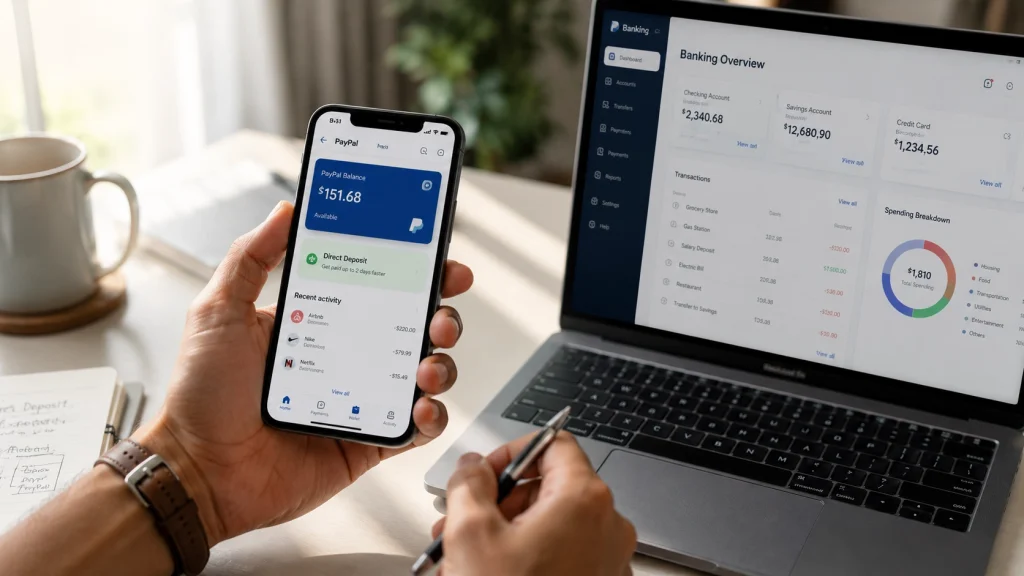
PayPal does not use one bank. It uses different banks for different products. The Bancorp Bank, N.A. issues the PayPal debit card and provides your direct deposit account. Synchrony Bank powers PayPal Savings and PayPal Credit. Your held balance is placed at program banks, which are Goldman Sachs Bank USA, Wells Fargo Bank, N.A., and JPMorgan Chase Bank, N.A. That is who PayPal banks with in the US (PayPal, 2026).
| PayPal product | Bank it uses | What the bank does |
|---|---|---|
| PayPal Debit Mastercard and direct deposit | The Bancorp Bank, N.A. | Issues the card, provides routing and account number |
| PayPal Savings | Synchrony Bank | Holds savings deposits, pays interest |
| PayPal Credit and Cashback Mastercard | Synchrony | Issues credit (exclusive issuer through 2028) |
| Your held balance (FDIC pass-through) | Goldman Sachs, Wells Fargo, JPMorgan Chase | Program banks that hold balance funds |
| Linking an outside bank account | via Plaid | Secure data connection between PayPal and your bank |
Sources: PayPal press releases and legal disclosures, January to May 2026.
The Bancorp Bank, N.A. (debit card and direct deposit)
The Bancorp Bank, N.A. is the bank most people mean when they ask what PayPal’s bank name is for everyday use. It issues the PayPal Debit Mastercard and provides the deposit account behind your routing and account number. When you get approved for the debit card, PayPal automatically gives you direct deposit numbers tied to The Bancorp (PayPal, January 2026). If you want that card, here is how to get a PayPal card in the mail.
Synchrony Bank (savings and credit)
Synchrony Bank handles PayPal’s interest products. PayPal Savings is provided by Synchrony Bank, and your savings money is held at Synchrony, not at PayPal (PayPal, January 2026). Synchrony is also the exclusive issuer of PayPal Credit and the PayPal Cashback Mastercard. PayPal and Synchrony signed a deal in 2018 that runs through 2028, and in June 2025 they launched a physical PayPal Credit card, also issued by Synchrony (PaymentsJournal, June 2025).
Synchrony is PayPal’s exclusive credit issuer in the US, under an agreement that runs through 2028. Source: PaymentsJournal, June 2025
If you are weighing PayPal Credit against other financing, this breakdown of PayPal Credit eligibility versus an SBA loan shows where the approval odds fall.
Program banks that hold your balance
PayPal calls the banks that hold your balance program banks. As of 2026, the current program banks are Goldman Sachs Bank USA, Wells Fargo Bank, N.A., and JPMorgan Chase Bank, N.A. When you have the debit card, direct deposit, or crypto enabled, PayPal places your US dollar balance at one or more of these banks, where it can qualify for pass-through FDIC insurance (PayPal Program Banks disclosure, May 2026). PayPal can add or drop a program bank at any time without notice, so this list can change.
What Bank Does PayPal Use for Direct Deposit?
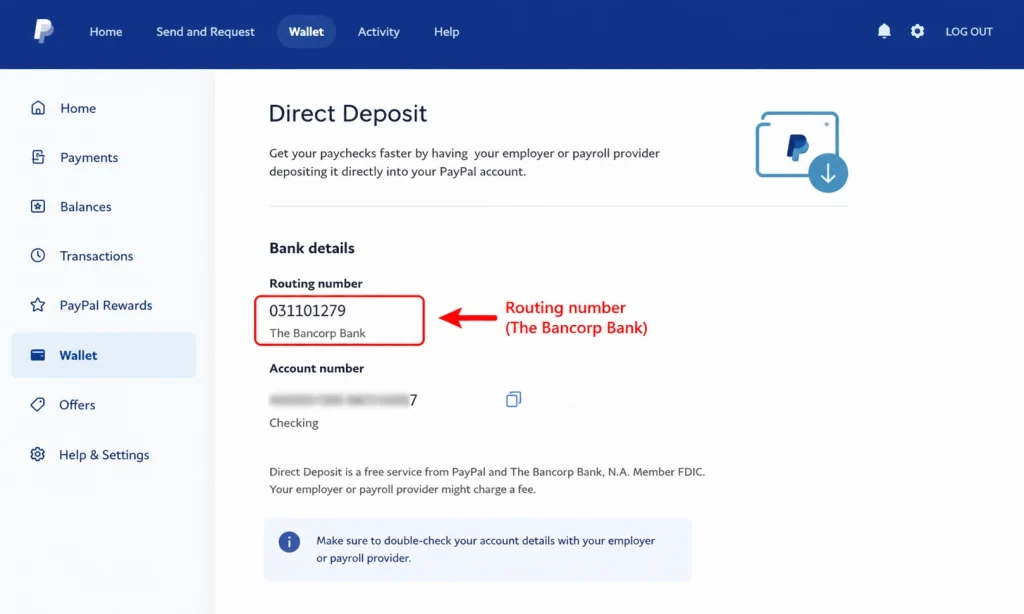
PayPal uses The Bancorp Bank, N.A. for direct deposit. When you enroll, PayPal gives you a routing number and a personal account number that route ACH deposits into your PayPal balance through The Bancorp. This lets you receive payroll, tax refunds, and government benefits straight into PayPal (PayPal, 2026).
PayPal’s routing number
PayPal’s routing number for direct deposit is 031101279, which belongs to The Bancorp Bank, N.A. You use it with your unique PayPal account number to receive ACH deposits. Note that this routing number is for receiving deposits only. To find your own numbers, log in, open your Wallet, and select Direct Deposit. Never guess these numbers. Copy them from inside your account, because a wrong digit can misroute your pay.
What to enter as the bank name
When a form asks for the bank name tied to your PayPal routing number, enter The Bancorp Bank, N.A. That is the institution behind routing number 031101279. Some older PayPal Cash accounts used a different custodial bank, so if your account predates the current debit card setup, confirm the exact name of PayPal’s bank in the Direct Deposit section of your account before you submit any form.
Is Your Money in PayPal FDIC Insured?
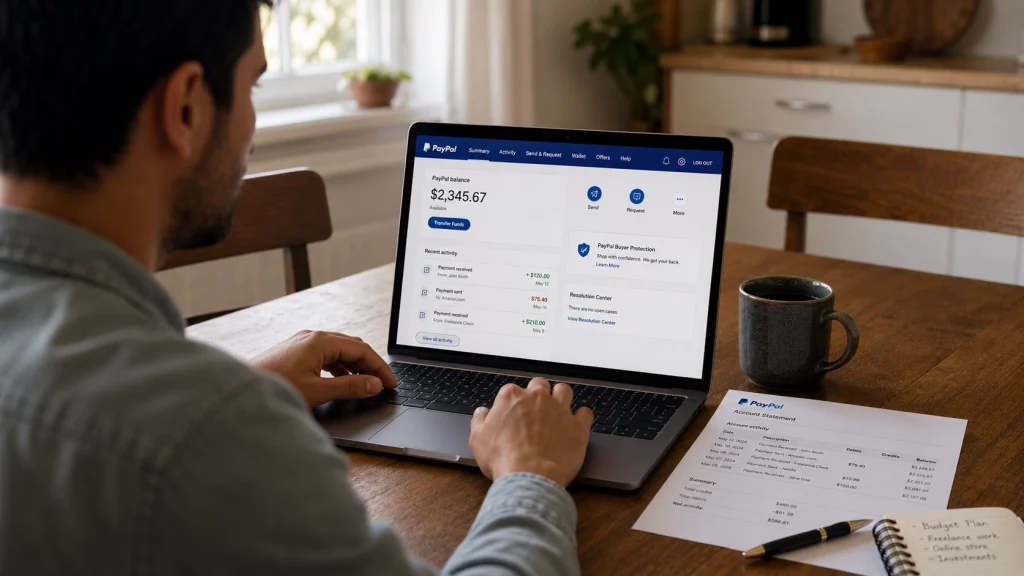
Sometimes, and only under specific conditions. PayPal itself is not FDIC insured. Your balance can qualify for pass-through FDIC insurance, but only if you have opened the PayPal debit card, enrolled in direct deposit, or bought crypto with your account. In that case, PayPal moves your funds to program banks where coverage passes through to you, up to $250,000 (PayPal, 2026).
Here is the catch many people miss. If you just keep a plain PayPal balance with none of those products, your money may not be FDIC eligible. The insurance also protects you against the failure of a program bank, not the failure of PayPal. The FDIC makes the same point: deposit insurance does not cover the failure of a non-bank company that sits between you and the bank (FDIC, 2024).
When your balance is actually covered
- You have a PayPal debit card, direct deposit, or crypto enabled, which triggers placement at a program bank.
- The funds are US dollars held in your personal PayPal balance.
- The program bank, not PayPal, is the one that fails. Coverage does not protect against PayPal itself failing.
- Cryptocurrency and non-US-dollar funds are never FDIC insured.
If security is your main concern, one simple step protects your account far more than worrying about which bank holds it. Turn on login protection. Our guide to PayPal two-factor authentication setup walks through it.
What Bank Is PayPal on Plaid?
When you connect PayPal to another app, you often go through Plaid. Plaid acts as a secure bridge that links your PayPal account to services like budgeting apps or money transfer tools. PayPal is one of thousands of financial institutions that connect through Plaid, which shares your details safely without handing over your password (Wise, 2023).
In practice, you pick PayPal from the list inside the other app, log in through Plaid, and approve the connection. This is different from linking a traditional bank account to PayPal directly. If you need to unlink a bank later, see how to remove a bank account from PayPal permanently. And if you want to run PayPal without linking a bank at all, here is how to verify PayPal without a bank account.
PayPal vs a Traditional Bank
PayPal can feel like a bank, but it is missing core bank services. You get a debit card, a savings account, and direct deposit. You do not get mortgages, auto loans, personal loans, or the branch support and dispute rights that come with a chartered bank. For most people, the smart move is to use PayPal for what it does well and keep a real bank account for everything else.
Where PayPal is genuinely useful
PayPal shines for online payments, sending money to people, and receiving freelance income fast. It is a favorite among freelancers and remote workers who get paid by clients in other countries. If you are building income this way, it helps to know how to find remote work that pays reliably into accounts like PayPal. The trade-off is cost. Fees add up on business transactions and currency conversion. If you sell online, it pays to see how Stripe and PayPal fees compare before you route serious volume through either one. Treating PayPal as a supplement to a bank, rather than a replacement, keeps your options open.
Frequently Asked Questions
Is PayPal a bank?
No. PayPal is a financial technology company, not a bank. It does not hold a bank charter and does not take deposits on its own. It partners with chartered banks that handle the regulated work, such as The Bancorp Bank for the debit card and Synchrony Bank for savings and credit. Your held balance sits at program banks like Goldman Sachs, Wells Fargo, and JPMorgan Chase (PayPal, 2026).
What is PayPal’s bank name?
PayPal does not have a single bank name, because it is not a bank. The name of PayPal’s bank depends on the product. For the debit card and direct deposit, PayPal’s bank is The Bancorp Bank, N.A. For savings and credit, it is Synchrony Bank. For your held balance, the banks are Goldman Sachs Bank USA, Wells Fargo, and JPMorgan Chase. On a direct deposit form, use The Bancorp Bank, N.A.
Who does PayPal bank with?
In the US, PayPal banks with a small set of named institutions. It banks with The Bancorp Bank for card and deposit services, Synchrony Bank for savings and credit, and Goldman Sachs, Wells Fargo, and JPMorgan Chase as program banks that hold customer balances. This is also the answer to what bank PayPal is associated with. Each bank has a defined role rather than one catch-all partnership (PayPal, 2026).
What bank does PayPal use for direct deposit?
PayPal uses The Bancorp Bank, N.A. for direct deposit. When you enroll, PayPal gives you a routing number and a unique account number that route ACH deposits into your balance through The Bancorp. You can use it for payroll, tax refunds, and government benefits. Find your exact numbers under Wallet, then Direct Deposit, inside your PayPal account (PayPal, 2026).
What is PayPal’s routing number?
PayPal’s routing number for direct deposit is 031101279, which belongs to The Bancorp Bank, N.A. You pair it with your personal PayPal account number to receive ACH deposits. This routing number is for receiving money only. Always copy the numbers from inside your own account rather than reusing a number you found online, since accounts can differ.
What bank does PayPal Credit use?
PayPal Credit is issued by Synchrony. Synchrony has been PayPal’s exclusive credit issuer in the US since a 2018 agreement that runs through 2028. This covers PayPal Credit online, the PayPal Cashback Mastercard, and the physical PayPal Credit card launched in June 2025. Approval runs through Synchrony, and your credit terms are set by that bank (PaymentsJournal, June 2025).
What bank does PayPal Savings use?
PayPal Savings is provided by Synchrony Bank, Member FDIC. Your savings money is held at Synchrony, not at PayPal. Because Synchrony is an FDIC-insured bank, PayPal Savings deposits are eligible for FDIC coverage up to $250,000, based on account ownership rules. You need a PayPal Balance account to open PayPal Savings (PayPal, January 2026).
Does PayPal use Wells Fargo?
Yes, but in a specific role. Wells Fargo Bank, N.A. is one of PayPal’s program banks, which hold your balance for FDIC pass-through insurance. Wells Fargo is not the bank that issues your PayPal debit card or your credit. It is one of the banks where your balance funds may be placed, alongside Goldman Sachs Bank USA and JPMorgan Chase (PayPal, 2026).
Is my PayPal money FDIC insured?
Only if you have the debit card, direct deposit, or crypto enabled, which moves your balance to a program bank. A plain PayPal balance with none of those may not be FDIC eligible. Coverage protects against a program bank failing, not PayPal failing, and never covers crypto or non-US-dollar funds. Check your account terms to confirm your status (PayPal, 2026).
What bank is PayPal on Plaid?
On Plaid, you connect to PayPal itself rather than to a separate bank. Plaid treats PayPal as one of thousands of financial institutions it links to. You select PayPal in the app you are connecting, sign in through Plaid, and approve access. Plaid then shares your details securely without exposing your PayPal password (Wise, 2023).
Conclusion
Back to that payroll form and its bank name field. Now you know the answer. PayPal is not a bank, so the name you want is The Bancorp Bank, N.A., the institution behind your PayPal routing number. That one detail trips up thousands of people because they assume PayPal is the bank. It is not.
The bigger takeaway is that PayPal spreads its banking across specialists. The Bancorp handles your card and deposits. Synchrony runs savings and credit. Goldman Sachs, Wells Fargo, and Chase hold your balance for insurance. Knowing who holds your money tells you when it is protected and when it is not. So before you park a large sum in PayPal, ask yourself one question: is this money I could stand to have frozen for a while if something went wrong?